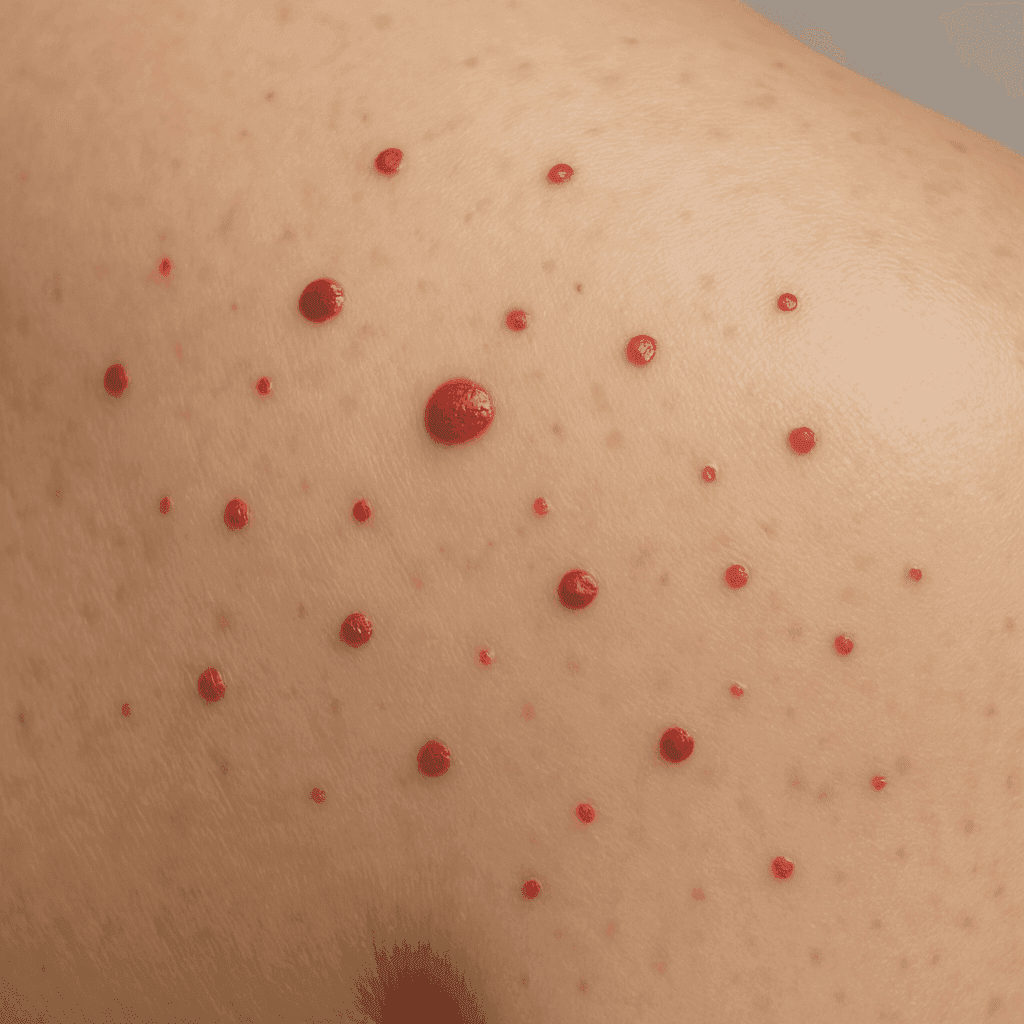
Cherry Angioma (Campbell de Morgan Spots)
Comprehensive guide to cherry angiomas.
Introduction
Cherry angiomas, often referred to as Campbell de Morgan spots, are common skin growths that appear as small, red, benign tumors. While they are typically harmless, understanding these skin conditions can be crucial for recognizing changes in your skin health. This article aims to provide a comprehensive overview of cherry angiomas, their causes, treatment options, and when it's essential to consult a healthcare professional.
What are Cherry Angiomas?
Cherry angiomas are small, bright red skin growths composed of clusters of dilated capillaries. They can appear anywhere on the body but are most commonly found on the trunk. These spots are usually round or oval and can vary in size from a pinhead to about a quarter inch in diameter.
Causes of Campbell de Morgan Spots
Genetic Factors
Genetics play a significant role in the development of cherry angiomas. Individuals with a family history of these spots may be more likely to develop them.
Environmental Influences
Certain environmental factors, such as exposure to chemicals or excessive sunlight, might contribute to their formation, although concrete evidence is limited.
Age-related Changes
Cherry angiomas often increase in number as individuals age, with a noticeable rise in occurrence in those over 30.
Symptoms and Identification
Cherry angiomas are typically identified by their distinct red color and smooth dome shape. They are often mistaken for moles or other skin lesions, but their bright red hue is usually a distinguishing factor.
Diagnosis
When to See a Dermatologist
If you're unsure whether a skin lesion is a cherry angioma, it is advisable to consult a dermatologist. A professional evaluation can help rule out other conditions.
Diagnostic Procedures
Usually, a visual examination is sufficient, but in some cases, a biopsy might be performed to confirm the diagnosis.
Treatment Options
Medical Treatments
- Laser Removal: This is a common procedure where a laser is used to target and destroy the angioma.
- Cryotherapy: Involves freezing the angioma with liquid nitrogen to remove it.
- Electrocauterization: Uses electrical currents to burn off the angioma.
Home Remedies and Natural Treatments
While some over-the-counter solutions claim to reduce cherry angiomas, their effectiveness is not well-documented. Natural remedies such as apple cider vinegar are popular but should be used with caution.
Are Cherry Angiomas Dangerous?
Cherry angiomas are generally not dangerous. However, if you notice rapid changes in size, color, or shape, or if they become symptomatic, such as bleeding, it is essential to seek medical advice.
Prevention and Management
While there is no guaranteed method to prevent cherry angiomas, maintaining a healthy lifestyle and monitoring skin health can be beneficial. Regular skin check-ups and using sunscreen may help manage your skin health effectively.
Cherry Angiomas and Other Conditions
Relationship with Liver Disease
There is no strong evidence linking cherry angiomas directly to liver disease, though some believe they may indicate underlying issues.
Genetic Predispositions
A genetic predisposition can increase the likelihood of developing cherry angiomas, often observed in families.
Conclusion
Cherry angiomas are common and typically benign. Understanding their characteristics and when to seek medical advice is essential for managing your skin health. Always consult a healthcare professional for a proper diagnosis and treatment plan.
Frequently Asked Questions
What causes cherry angiomas to suddenly appear?
They can appear suddenly due to age, genetic factors, or environmental influences.
Can cherry angiomas be a sign of cancer?
Cherry angiomas are benign and not cancerous, but changes in them should be evaluated by a doctor.
How can I prevent cherry angiomas?
While prevention is not guaranteed, protecting your skin from the sun and maintaining a healthy lifestyle might help.
Are there any natural treatments for cherry angiomas?
Natural remedies exist but are not scientifically proven. Consult with a healthcare professional before trying them.
Do cherry angiomas go away on their own?
They usually do not disappear without treatment.
Is it safe to remove cherry angiomas at home?
Home removal is not recommended due to the risk of infection and scarring. Always consult a healthcare provider.