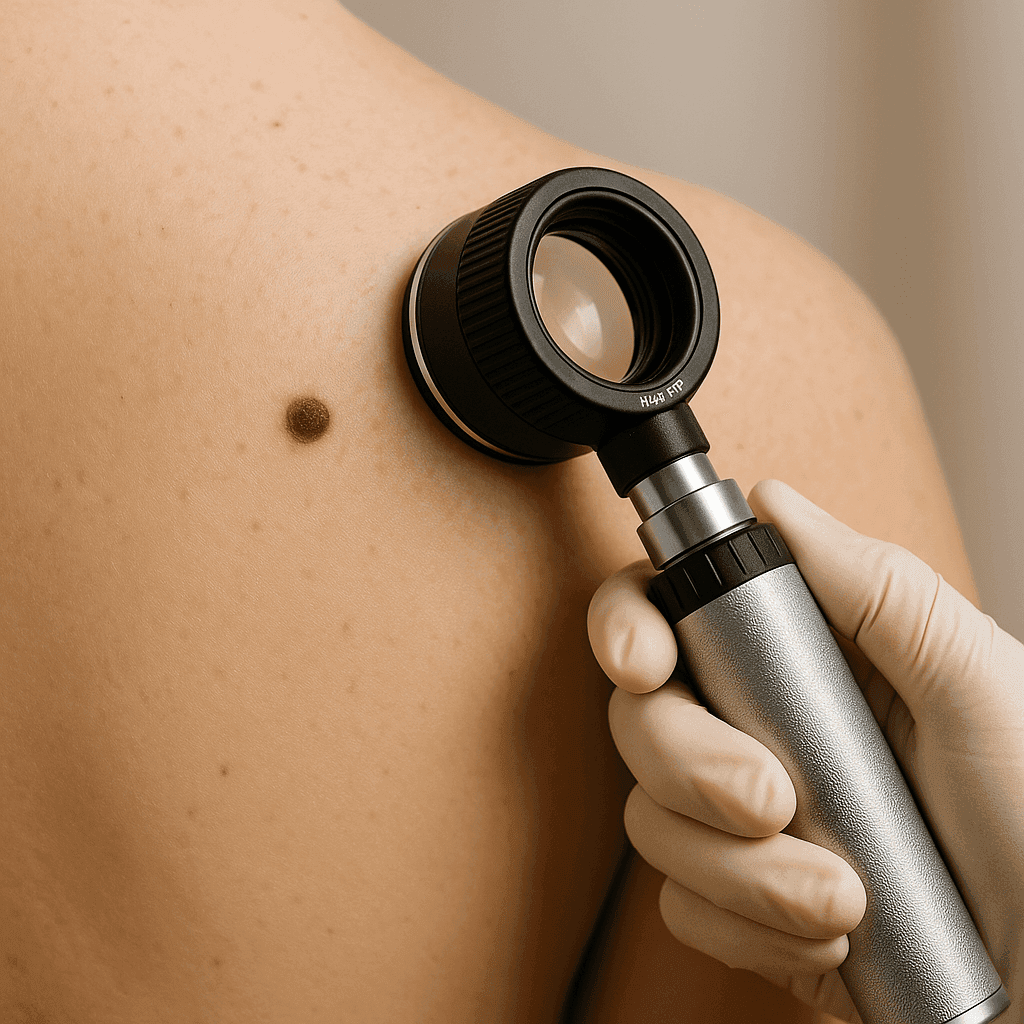
Dermatoscopy: What to Expect During a Mole Examination
Learn about dermatoscopy and mole examinations.
Introduction
Dermatoscopy is a specialized procedure used to examine moles and other skin lesions with enhanced accuracy. It allows dermatologists to look beneath the surface of the skin and make more informed assessments of potential abnormalities. Regular mole examinations are crucial for early detection of skin conditions, particularly skin cancer. Understanding the process and benefits of dermatoscopy can help patients feel more at ease during their appointments.
What is Dermatoscopy?
Dermatoscopy, also known as dermoscopy or epiluminescence microscopy, is a non-invasive diagnostic method used to examine skin lesions with the aid of a dermatoscope. This handheld device uses magnification and polarized or non-polarized light to provide a detailed view of skin structures not visible to the naked eye. Unlike a standard visual examination, dermatoscopy offers a closer look at the pigmentation and vascular structures of a mole, which can help in distinguishing benign moles from malignant ones.
The Dermatoscopy Procedure
During a dermatoscopy, a dermatologist will first explain the process and ensure the patient's comfort. The examination involves applying a small amount of gel or oil to the skin to improve light penetration. The dermatoscope is then placed against the skin to capture detailed images of the mole. The procedure is generally quick, taking only a few minutes per mole. Tools such as digital dermatoscopes can store images for future comparison, aiding in the monitoring of changes over time.
Preparing for Your Mole Examination
To prepare for a dermatoscopy, patients should avoid applying lotions or creams to the area to be examined on the day of the appointment. It is also helpful to compile a list of any moles that have changed in appearance or have caused concern. Informing your dermatologist about your medical history, including any family history of skin cancer, is vital for an accurate assessment.
What to Expect During the Examination
Patients can expect a painless experience during a dermatoscopy. The dermatologist will examine the mole closely, looking for asymmetry, irregular borders, multiple colors, and large diameters—all potential indicators of melanoma. Understanding the dermatoscopic images can be insightful; these images reveal intricate details such as pigment networks and vascular patterns that assist in diagnosis.
Benefits of Dermatoscopy
The primary advantage of dermatoscopy is its non-invasive nature, which eliminates the need for surgical intervention unless necessary. It allows for the early detection of skin conditions, potentially identifying malignancies before they become life-threatening. Dermatoscopy provides a high degree of precision and accuracy, enabling dermatologists to make more informed decisions about whether a biopsy is warranted.
Comparing Dermatoscopy with Other Methods
While traditional visual examinations provide a basic overview, dermatoscopy offers a deeper insight into the characteristics of a mole. Compared to a biopsy, dermatoscopy is non-invasive and painless, making it an appealing first-line examination. However, if dermatoscopy reveals suspicious features, a biopsy may still be recommended to confirm a diagnosis.
Advances in Dermatoscopy Technology
Recent years have seen significant advancements in dermatoscopy, particularly with the integration of artificial intelligence and digital tools. AI can assist in analyzing dermatoscopic images, providing a risk assessment that aids dermatologists in decision-making. Digital dermatoscopes enhance the accuracy and efficiency of examinations, allowing for better tracking of mole changes over time.
FAQ About Dermatoscopy
What is the main purpose of dermatoscopy?
The main purpose of dermatoscopy is to provide a detailed examination of skin lesions to differentiate between benign and malignant moles.
How often should I have a mole examination?
It is recommended to have a mole examination annually or more frequently if you have a history of skin cancer.
Is dermatoscopy painful?
No, dermatoscopy is a painless procedure.
Can dermatoscopy detect all types of skin cancer?
While dermatoscopy is effective in identifying many types of skin cancer, it is not foolproof. A biopsy may still be needed for confirmation.
Do I need to prepare anything before the examination?
Avoid applying lotions or creams to the area on the day of the examination, and be ready to discuss your medical history.
How reliable are the results of a dermatoscopy?
Dermatoscopy is highly reliable, but the final diagnosis should always be confirmed by a dermatologist.