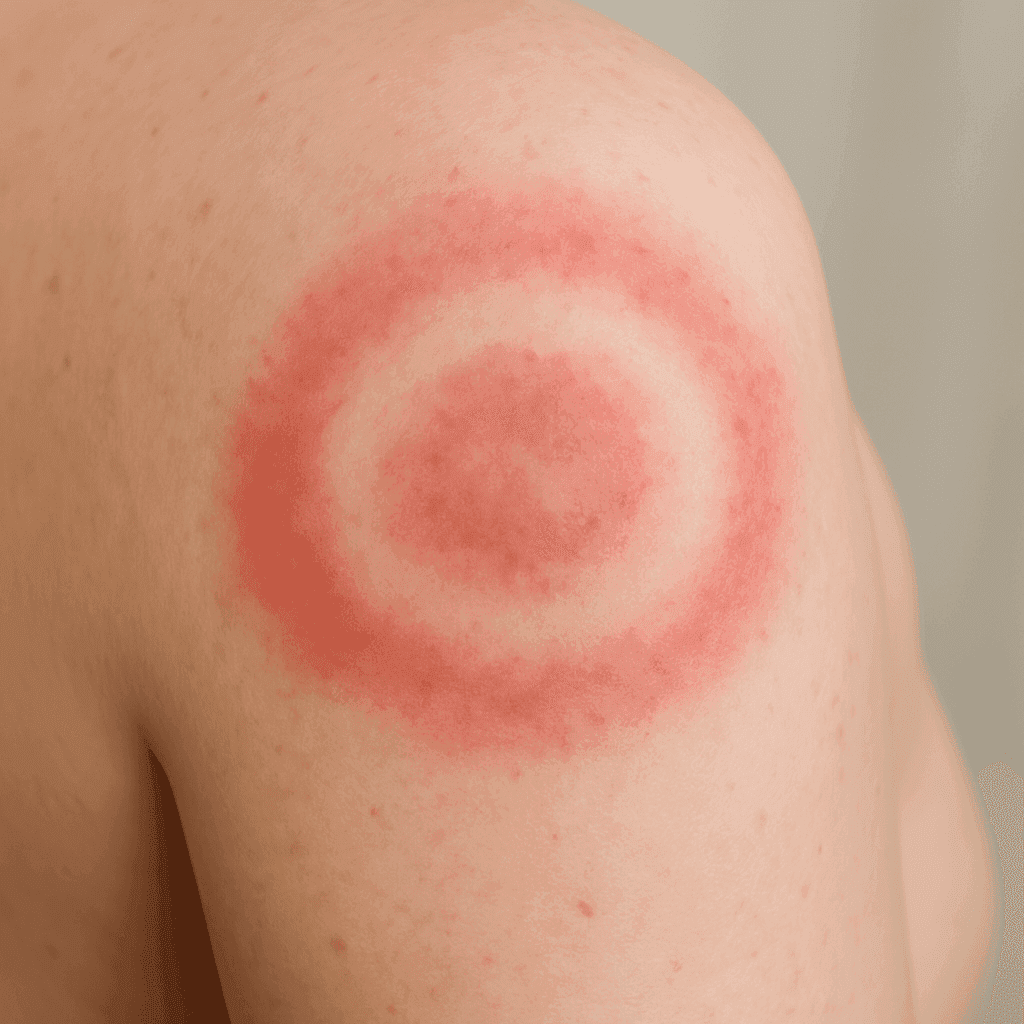
Erythema migrans – the characteristic rash of Lyme disease
Understanding Lyme disease's erythema migrans rash.
Introduction
Lyme disease is a prevalent tick-borne illness caused by the bacterium Borrelia burgdorferi. One of the earliest and most recognizable signs of Lyme disease is the erythema migrans rash. Recognizing this rash can be crucial for early diagnosis and treatment, which can prevent more severe manifestations of the disease. Erythema migrans is often referred to as the "bullseye" rash due to its distinctive appearance, though variations do exist.
Understanding Erythema Migrans
Erythema migrans is a skin rash that typically appears within 3 to 30 days after a tick bite that transmits Lyme disease. It was first described in Europe in the early 20th century, with its characteristic expanding red area surrounding the site of the bite. This rash is a hallmark of early localized Lyme disease and serves as a key indicator for medical professionals to consider Lyme disease when diagnosing patients.
Characteristics of Erythema Migrans
Appearance and Typical Locations
Erythema migrans often starts as a small red spot at the site of a tick bite and gradually expands over days to weeks. It can reach sizes of up to 12 inches or more in diameter. The rash may appear on any part of the body but is commonly found on the thighs, groin, trunk, and armpits. In some cases, the center of the rash clears as it expands, giving it a bullseye appearance.
Variations in Presentation
Not all erythema migrans rashes look the same. Some may appear uniformly red, while others may have a more complex pattern or be less well-defined. Erythema migrans can also appear differently depending on skin tone, potentially appearing as a bruise rather than a red rash in individuals with darker skin tones.
Causes and Risk Factors
Lyme disease is primarily transmitted through the bite of infected black-legged ticks, also known as deer ticks. The risk of developing erythema migrans increases with prolonged tick attachment, typically 36 to 48 hours. Spending time in wooded or grassy areas increases the likelihood of exposure to ticks, thus elevating the risk of Lyme disease and its associated rash.
Diagnosis of Erythema Migrans
Clinical Diagnosis Criteria
The diagnosis of erythema migrans is primarily clinical, based on the characteristic appearance of the rash and a history of potential exposure to ticks. Unlike many other symptoms of Lyme disease, erythema migrans does not require laboratory confirmation.
Diagnostic Tests and Their Roles
While the presence of erythema migrans is often sufficient for diagnosis, blood tests can sometimes aid in confirming Lyme disease, especially in atypical cases. However, these tests may not be positive in the early stages when the rash first appears. It's crucial to differentiate erythema migrans from other rashes, such as ringworm or cellulitis, to ensure appropriate treatment.
Treatment Options
First-Line Treatments for Erythema Migrans
The standard treatment for erythema migrans is a course of antibiotics, which can effectively eliminate the infection and prevent progression to more serious forms of Lyme disease. Doxycycline is commonly prescribed for adults and children over 8 years old, while amoxicillin or cefuroxime axetil may be used for younger children and pregnant women.
Antibiotic Therapy and Duration
Typically, a 10- to 21-day course of antibiotics is recommended, depending on the specific medication and patient characteristics. Early treatment is key to preventing complications and ensuring complete recovery.
Prevention of Erythema Migrans
Preventive Measures Against Tick Bites
Preventing tick bites is the most effective way to avoid Lyme disease and erythema migrans. This includes using insect repellent, wearing protective clothing, performing regular tick checks, and showering after spending time in tick-prone areas.
Role of Vaccines and Research Developments
While there is currently no vaccine for Lyme disease approved for human use, research is ongoing. Staying informed about new developments in Lyme disease prevention is important for those in high-risk areas.
Erythema Migrans in Special Populations
Erythema Migrans in Children
Children are particularly susceptible to tick bites due to their outdoor activities. The presentation of erythema migrans in children is similar to adults, though the rash may be harder to identify on darker skin tones. Prompt treatment is crucial to prevent complications in children.
Considerations for Pregnant Women
Pregnant women who develop erythema migrans should seek medical treatment immediately, as untreated Lyme disease can potentially affect the fetus. Antibiotic treatment is generally safe during pregnancy, with amoxicillin often being the preferred choice.
FAQs about Erythema Migrans
What does erythema migrans look like?
Erythema migrans typically appears as an expanding red rash, often with a central clearing forming a "bullseye" shape. However, variations exist, and it can look different on various skin tones.
Can erythema migrans appear without a tick bite?
Erythema migrans is directly linked to the Lyme disease bacterium, which is transmitted by tick bites. While a tick bite may go unnoticed, the rash itself suggests the presence of an infection.
How long does erythema migrans last?
With appropriate antibiotic treatment, the rash usually resolves within a few weeks. Without treatment, it may persist longer and lead to more severe disease.
Is erythema migrans contagious?
Erythema migrans itself is not contagious. Lyme disease is transmitted through tick bites, not person-to-person contact.
What should I do if I suspect erythema migrans?
If you suspect erythema migrans, seek medical advice promptly. Early diagnosis and treatment with antibiotics are crucial to prevent complications.
Can erythema migrans recur after treatment?
While erythema migrans typically resolves with treatment, it can recur if a person is bitten by another infected tick. Preventive measures are essential to avoid re-exposure.