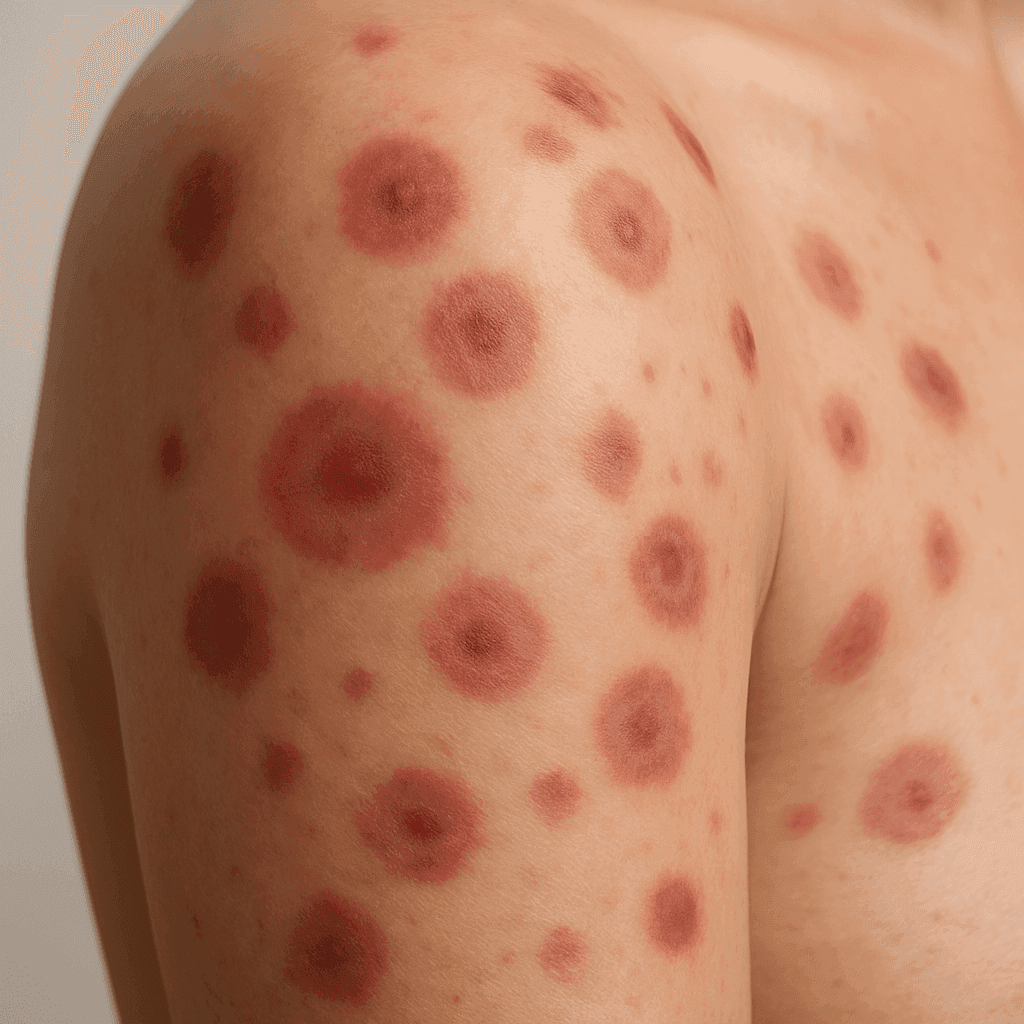
Erythema Multiforme: Causes, Symptoms, and Treatment
Understanding erythema multiforme: causes, symptoms, treatment.
Introduction
Erythema multiforme is a skin condition characterized by distinctive red lesions. Understanding this condition is vital for effective management and improving patient outcomes. It can vary in severity, and while often triggered by infections or medications, the exact cause can sometimes be elusive. This article outlines the various aspects of erythema multiforme, including its causes, symptoms, diagnosis, and treatment options.
What is Erythema Multiforme?
Erythema multiforme is an acute, immune-mediated condition affecting the skin and mucous membranes. It is classified into two major categories: erythema multiforme minor, which primarily affects the skin, and erythema multiforme major, which also involves mucosal surfaces such as the mouth and eyes. Recognizing the differences between these forms is crucial for proper management and treatment.
Causes of Erythema Multiforme
Erythema multiforme is often triggered by infections, with the herpes simplex virus being the most common culprit. Other infectious agents include mycoplasma pneumonia and certain fungi. Medications such as antibiotics and anticonvulsants can also induce erythema multiforme. In some cases, autoimmune conditions may play a role, although the exact mechanisms are still being researched.
Symptoms of Erythema Multiforme
The hallmark of erythema multiforme is the appearance of target lesions—round, red patches with concentric color zones. These lesions typically arise on the extremities but can spread to other body parts. Systemic symptoms may include fever, malaise, and joint pain. In erythema multiforme major, lesions may also appear on mucous membranes, causing discomfort and potential complications.
Diagnosis of Erythema Multiforme
Diagnosis is primarily clinical, based on the distinctive appearance of the lesions and patient history. Supporting tests may include blood tests, viral cultures, and in some cases, a skin biopsy to confirm the diagnosis and rule out similar conditions. Early and accurate diagnosis is essential for effective management and to prevent complications such as secondary infections.
Treatment Options for Erythema Multiforme
Treatment focuses on alleviating symptoms and addressing the underlying cause. Mild cases may resolve on their own, but symptomatic relief can be provided through antihistamines and topical corticosteroids. Severe cases, especially those involving mucosal surfaces, may require systemic corticosteroids. Home remedies such as cool compresses and moisturizing lotions can provide additional relief. Preventing recurrence involves identifying and avoiding known triggers.
Complications and Prognosis
While erythema multiforme is generally self-limiting, complications can arise, particularly in the major form. These can include dehydration, secondary skin infections, and vision problems if the eyes are involved. The prognosis is generally good, with most patients experiencing full recovery without lasting effects. However, in some cases, recurrence is possible, necessitating close monitoring and preventive strategies.
Erythema Multiforme vs Other Skin Conditions
Distinguishing erythema multiforme from other conditions such as Stevens-Johnson syndrome and toxic epidermal necrolysis is crucial. These conditions share some clinical features but differ significantly in severity and treatment approaches. Other differential diagnoses include urticaria and drug eruptions, underscoring the importance of thorough clinical evaluation and appropriate testing.
FAQs about Erythema Multiforme
- What triggers erythema multiforme? Common triggers include infections, particularly herpes simplex virus, and certain medications.
- How is erythema multiforme diagnosed? Diagnosis is mainly clinical, supported by patient history and sometimes confirmed with a skin biopsy.
- Can erythema multiforme recur? Yes, recurrence is possible, especially if the underlying trigger is not addressed.
- What is the difference between erythema multiforme major and minor? Major affects mucous membranes, while minor typically does not.
- Are there any effective home remedies for erythema multiforme? Cool compresses and moisturizing lotions can help alleviate symptoms.
- How can erythema multiforme be prevented? Avoiding known triggers and managing underlying conditions can help prevent recurrence.