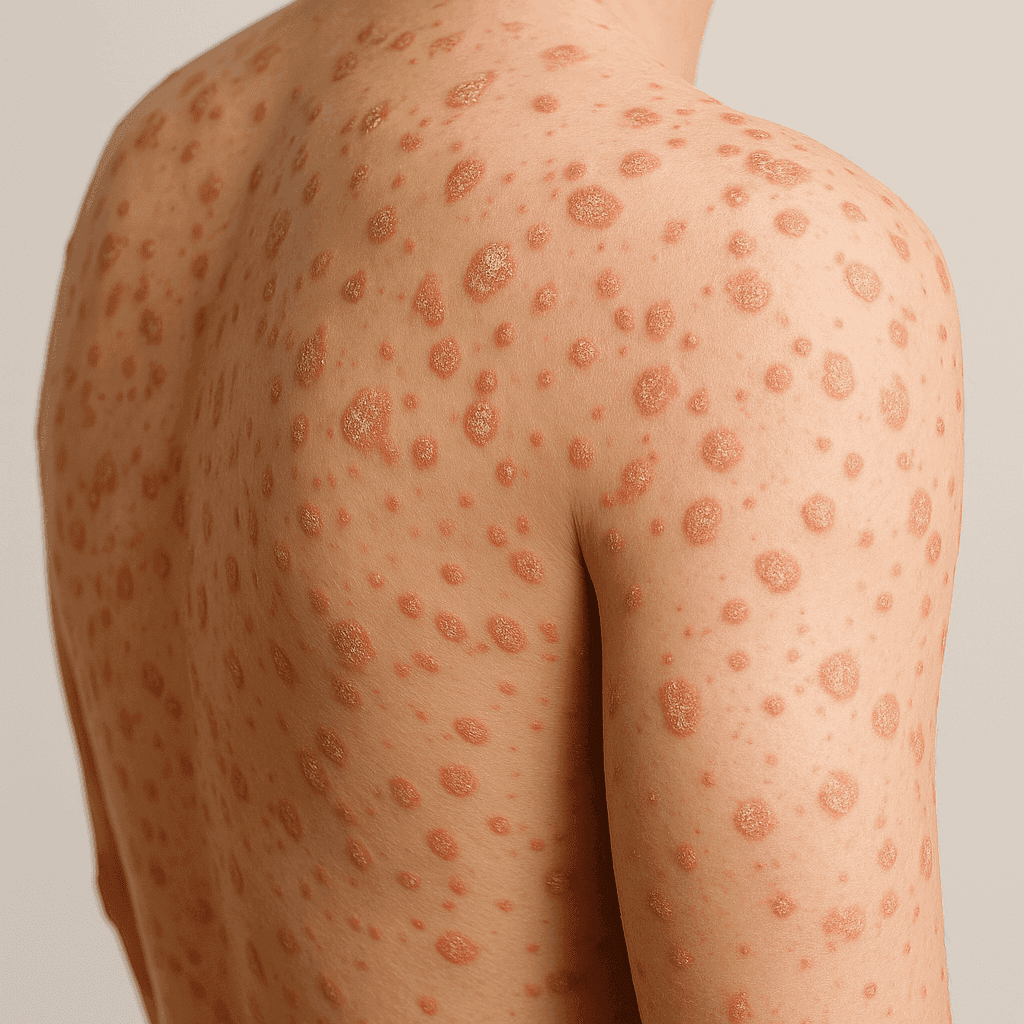
Guttate Psoriasis – Symptoms and Treatment
Understand guttate psoriasis symptoms and treatments.
Introduction
Guttate psoriasis is a form of psoriasis characterized by small, drop-shaped lesions on the skin. It is important for individuals to understand the symptoms and treatment options available for managing this condition effectively. While it can be distressing, knowing the potential causes, triggers, and management strategies can empower those affected to take control of their skin health.
What is Guttate Psoriasis?
Guttate psoriasis is a type of psoriasis that presents with small, red, scaly spots, typically on the trunk and limbs. Unlike plaque psoriasis, which features large, thickened patches, guttate psoriasis is marked by numerous small lesions. It often occurs after a streptococcal throat infection and is more common among children and young adults.
Characteristics and Differentiation
These spots are usually not as thick as those seen in plaque psoriasis but can be widespread, covering large areas of the body. Understanding these distinctions is crucial in accurately identifying and managing the condition.
Symptoms of Guttate Psoriasis
Common symptoms include small, drop-shaped red spots on the skin that are covered with a fine scale. These lesions often appear suddenly and can cover large areas of the body such as the arms, legs, and torso. The severity of symptoms can vary, with some individuals experiencing mild irritation while others encounter significant discomfort. These symptoms can last for several weeks or months before subsiding.
Causes and Triggers
The exact cause of guttate psoriasis is not fully understood, but genetic factors play a significant role. Environmental triggers such as stress, skin injury, and certain infections, particularly streptococcal throat infections, are known to precipitate outbreaks. Managing stress and maintaining a healthy lifestyle can help reduce the frequency and severity of flare-ups.
Diagnosis of Guttate Psoriasis
Diagnosis typically involves a clinical evaluation by a dermatologist. This may include a physical examination and discussion of medical history. In some cases, a skin biopsy or throat culture may be necessary to confirm the diagnosis and rule out other conditions, such as eczema or other types of psoriasis.
Treatment Options for Guttate Psoriasis
Medical Treatments
Topical treatments, such as corticosteroids and vitamin D analogues, are often used to reduce inflammation and scaling. For more severe cases, systemic medications like methotrexate or biologics may be prescribed. Phototherapy, which involves exposing the skin to ultraviolet light under medical supervision, can also be effective in managing symptoms.
Natural and Home Remedies
In addition to medical treatments, natural remedies such as applying aloe vera, oatmeal baths, and maintaining a healthy diet rich in anti-inflammatory foods can be beneficial. Lifestyle modifications, including stress management and regular moisturization, play a crucial role in skin care routines.
Managing Guttate Psoriasis
Implementing a daily skin care routine is essential for managing guttate psoriasis effectively. This includes using gentle, non-irritating skin products and keeping the skin well-moisturized. Coping with flare-ups requires patience and adherence to prescribed treatments, while long-term management strategies focus on preventing recurrence through lifestyle adjustments and regular medical checkups.
Guttate Psoriasis in Children
Children with guttate psoriasis may require special considerations, as their skin can be more sensitive. Pediatric dermatologists often tailor treatment plans that minimize potential side effects while effectively managing symptoms. Parents should work closely with healthcare providers to ensure the best outcomes for their children.
Prevention and Recurrence
Preventing flare-ups involves identifying and avoiding known triggers, such as infections and stress. Effective management of recurrence focuses on maintaining treatment regimens and making necessary lifestyle changes. Regular monitoring by a healthcare professional can help in adjusting treatment plans as needed.
FAQs about Guttate Psoriasis
What are the early signs of guttate psoriasis?
Early signs include the sudden appearance of small, red, scaly spots on the skin, often following an infection.
Can guttate psoriasis go away on its own?
Yes, guttate psoriasis can sometimes resolve without treatment, although medical intervention can help manage symptoms more effectively.
How is guttate psoriasis different from plaque psoriasis?
Guttate psoriasis is characterized by small, drop-shaped lesions, whereas plaque psoriasis involves larger, thicker patches.
Are there any effective home remedies for guttate psoriasis?
Home remedies like oatmeal baths, aloe vera, and lifestyle changes can complement medical treatments.
Does diet impact guttate psoriasis symptoms?
A diet rich in anti-inflammatory foods may help reduce symptoms, although more research is needed to confirm this.
How can stress management help with guttate psoriasis?
Stress management techniques such as meditation and exercise can help reduce flare-ups and improve overall skin health.