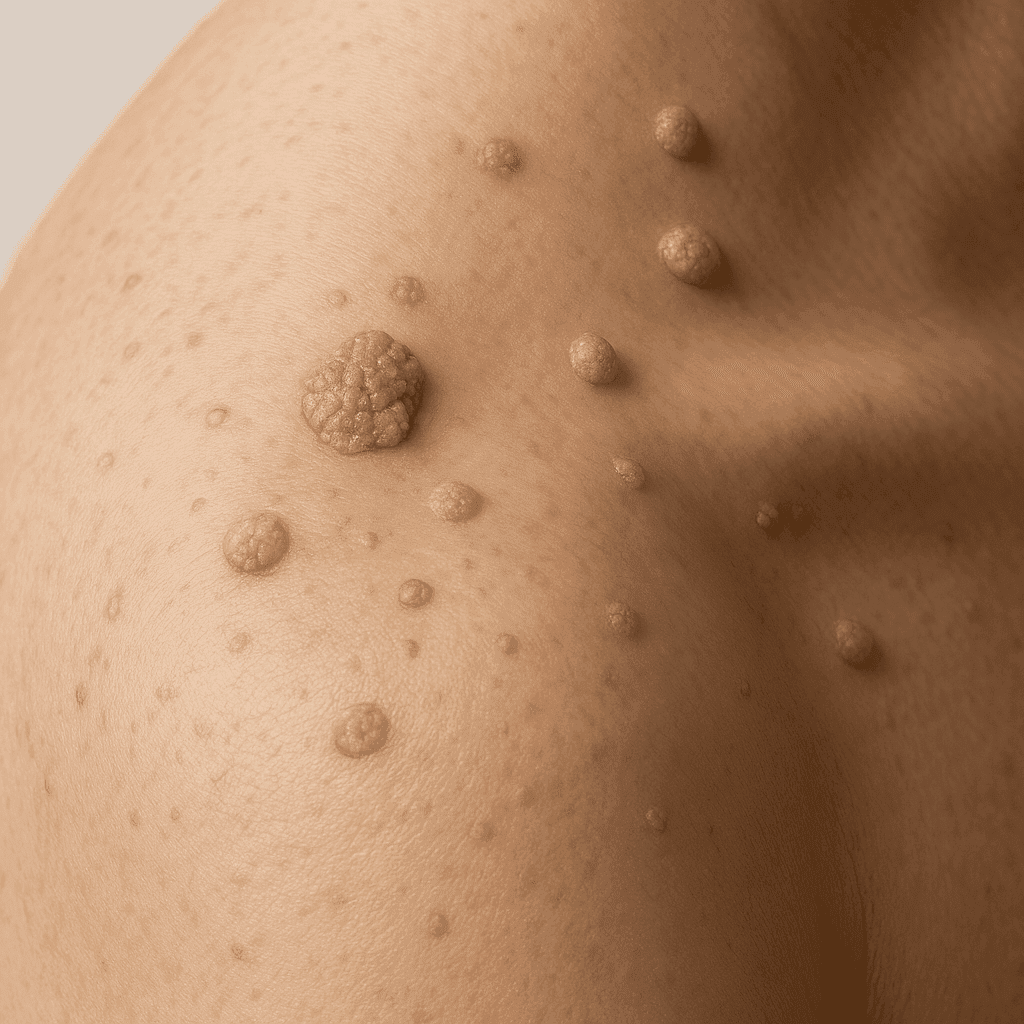
HPV on the skin - types of warts and treatment methods
Learn about HPV skin warts and treatment methods.
Introduction
Human papillomavirus (HPV) is a common pathogen that can cause various skin lesions, including warts. There are many types of HPV, and some of them can lead to the formation of warts on the skin. Although most HPV infections are harmless, it is important to understand how the virus affects the skin and what symptoms may occur.
HPV affects the outer layers of the skin, often causing the appearance of characteristic warts. These warts can have different shapes and occur in different places on the body, depending on the strain of the virus. In addition to the aesthetic aspect, they can also cause physical discomfort.
Types of skin warts caused by HPV
Common warts
Common warts, most often found on the fingers and toes, are often rough and raised. They may be skin-colored or slightly darker. They are the result of infection with one of the many strains of HPV that prefer to develop in these areas.
Flat warts
Flat warts are smaller and less visible than common warts. They often appear in larger groups, especially on the face and neck. They have a smooth surface and may be slightly darker or lighter than the surrounding skin.
Plantar warts
Located on the soles of the feet, plantar warts can be painful due to the pressure exerted on them by shoes when walking. They are characterized by a thick, hard surface and may have dark spots in the center, which are the result of clotted blood vessels.
Diagnosis and identification of HPV warts
Recognizing skin warts caused by HPV can be difficult without the right tools and knowledge. Many of these skin lesions look similar to other benign growths, making them difficult to identify. Typical HPV warts can be distinguished by their location, shape, and texture.
To accurately determine whether a skin lesion is an HPV wart, it is best to consult a dermatologist. A specialist may use dermatoscopy or other diagnostic methods to confirm the presence of the virus.
Differences between HPV warts and other skin lesions
Skin warts caused by HPV are often confused with corns, calluses, or even benign skin tumors. The key difference is that HPV warts may have characteristic black dots, which are clotted blood vessels. Unlike other lesions, warts can also spread more quickly and appear in larger groups.
Methods of treating HPV warts
Pharmacological treatment
Pharmacological treatment of HPV warts involves the use of creams and ointments containing salicylic acid or other active ingredients that help exfoliate them. In some cases, your doctor may prescribe oral medications that support the immune system in fighting the virus.
Dermatological treatments
Dermatological treatments, such as cryotherapy or electrocoagulation, are often used to remove HPV warts. Cryotherapy involves freezing the warts with liquid nitrogen, which causes them to die. Electrocoagulation, on the other hand, uses electric current to destroy the warts.
Natural and home remedies
There are also home remedies for treating warts, such as using apple cider vinegar or tea tree oil. While some of these methods may be effective, it is always a good idea to consult your doctor before using them to make sure they are safe.
Prevention and prophylaxis
Preventing HPV infections on the skin is possible by following a few simple hygiene rules. Avoiding direct contact with other people's warts and avoiding sharing personal items such as towels can significantly reduce the risk of infection.
HPV vaccinations are also an important part of prevention. Although they are better known for protecting against cervical cancer, they can also help prevent certain types of skin warts.
The impact of HPV warts on health
Can HPV warts lead to more serious health problems?
In most cases, HPV warts are benign and do not lead to more serious health problems. However, some strains of the virus may be associated with cancer risk. For this reason, it is important to monitor any skin changes and consult a doctor if they grow at an alarming rate.
Psychological and social aspects of HPV warts
Although warts are usually harmless, they can cause psychological discomfort and affect self-esteem. Visible warts can be a source of embarrassment and insecurity, which in turn can lead to avoidance of social contact.
Summary
HPV warts are common skin lesions that can affect various aspects of life. Although they are usually benign, their appearance can cause physical and psychological discomfort. Understanding how to recognize and treat HPV warts can help in their effective management.
It is also crucial to implement preventive measures, such as personal hygiene and vaccination, to minimize the risk of infection. If in doubt, it is advisable to consult a dermatologist for a professional assessment and treatment plan.
Bibliography
- Scientific and medical sources on HPV and skin warts, such as publications in dermatology journals and medical textbooks.