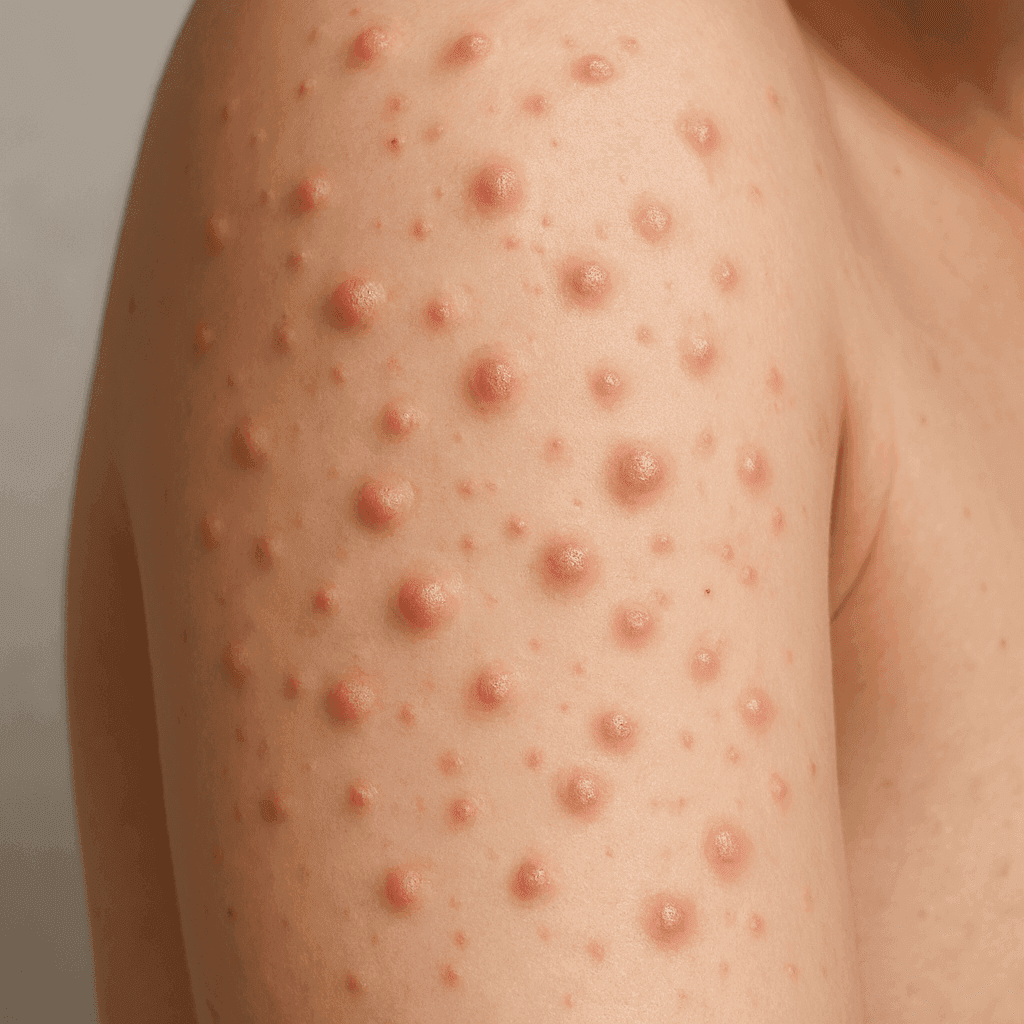
Itchy Bumps on the Body – Possible Skin Diseases
Explore causes and treatments for itchy skin bumps.
Introduction
Itchy bumps on the body can be an irritating and perplexing problem. They may appear suddenly or develop over time, causing significant discomfort and concern. Understanding the potential causes and treatments can help manage this condition effectively. It's crucial to note that while some itchy bumps resolve on their own, others may require medical attention. Always prioritize professional consultation for a definitive diagnosis.
Common Causes of Itchy Bumps
Hives (Urticaria)
Hives are raised, itchy welts on the skin that can vary in size and appear anywhere on the body. They are often a result of an allergic reaction to food, medication, or other irritants. Stress, temperature changes, and infections can also trigger hives. Managing hives typically involves identifying and avoiding triggers, as well as using antihistamines to reduce itching.
Eczema (Atopic Dermatitis)
Eczema is a chronic condition characterized by inflamed, itchy patches of skin. Commonly affected areas include the elbows, knees, and face. The skin may appear red, dry, and scaly. Eczema can be triggered by allergens, stress, and environmental factors. Moisturizing regularly and avoiding irritants are key to managing eczema.
Contact Dermatitis
Contact dermatitis occurs when the skin reacts to direct contact with a substance, leading to redness, itching, and bumps. Common irritants include soaps, detergents, or metals like nickel. To prevent contact dermatitis, it's important to identify and avoid known irritants. Treatment involves using topical corticosteroids and soothing lotions.
Psoriasis
Psoriasis is an autoimmune condition that results in the rapid growth of skin cells, forming itchy, scaly patches. These patches are typically found on the scalp, elbows, and knees. Psoriasis can be exacerbated by stress, cold weather, and infections. Treatment may include topical treatments, phototherapy, and systemic medications.
Folliculitis
Folliculitis is the inflammation of hair follicles, often resulting in itchy, red bumps. It can be caused by bacterial infections, shaving, or wearing tight clothing. Treatment involves good hygiene, topical antibiotics, and avoiding shaving the affected area until it heals.
Less Common Causes
Scabies
Scabies is a skin infestation caused by tiny mites that burrow into the skin, causing intense itching and a pimple-like rash. It spreads through prolonged skin-to-skin contact and requires prescription medication for treatment. Early diagnosis and treatment are crucial to prevent spreading.
Insect Bites
Insect bites from mosquitoes, bedbugs, or fleas can lead to itchy, red bumps. Identifying the bite is key to managing symptoms. Applying anti-itch creams and using insect repellents can aid in prevention and relief.
Heat Rash (Miliaria)
Heat rash occurs when sweat ducts become blocked, leading to small red or clear bumps. It is common in hot, humid conditions. Keeping the skin cool and dry helps prevent and treat heat rash.
Stress-Related Itchy Bumps
Stress can exacerbate skin conditions, leading to itchy bumps. Stress-related skin issues may not have a visible rash but can be managed with stress-reduction techniques and supportive skin care.
Diagnosis and Testing
It's important to seek medical advice if itchy bumps are persistent, severe, or accompanied by other symptoms. A healthcare provider may conduct a physical examination, take a medical history, and perform tests such as skin biopsies or allergy tests to determine the cause. Early diagnosis can aid in effective treatment and management.
Treatment Options
Over-the-counter Treatments
Over-the-counter remedies like antihistamines and topical creams can provide relief for mild cases. Calamine lotion and hydrocortisone creams are commonly used to alleviate itching and inflammation.
Prescription Medications
For more severe cases, prescription medications such as stronger corticosteroids or immunosuppressants may be necessary. Consult a healthcare provider to discuss these options.
Home Remedies and Lifestyle Changes
Natural remedies, including oatmeal baths, aloe vera, and cool compresses, can soothe itchy skin. Maintaining a balanced diet, staying hydrated, and using fragrance-free skincare products can also help manage symptoms.
Prevention Tips
To prevent itchy bumps, adopt a gentle skincare routine. Use mild soaps and moisturizers, avoid known allergens, and wear loose, breathable clothing. Regularly washing bedding and maintaining a cool, dry environment can also reduce the risk of developing itchy skin conditions.
FAQs
What are the most common causes of itchy bumps on the body?
Common causes include hives, eczema, contact dermatitis, and insect bites. Each condition has specific triggers and treatment options.
Can stress cause itchy bumps on the skin?
Yes, stress can exacerbate skin conditions and lead to itchy bumps. Managing stress through relaxation techniques can help reduce symptoms.
How can I tell the difference between hives and other skin conditions?
Hives are typically raised, red welts that appear suddenly and can change shape or location. Other conditions may have more persistent or scaly patches.
What home remedies can help soothe itchy skin?
Oatmeal baths, aloe vera, and cool compresses can provide relief. Keeping the skin moisturized and avoiding irritants is also beneficial.
When should I consult a doctor about itchy bumps?
Consult a doctor if the bumps are persistent, severe, spreading, or accompanied by other symptoms like fever.
Are itchy bumps on the body contagious?
It depends on the cause. Conditions like scabies or certain infections can be contagious, while others, like eczema or psoriasis, are not.