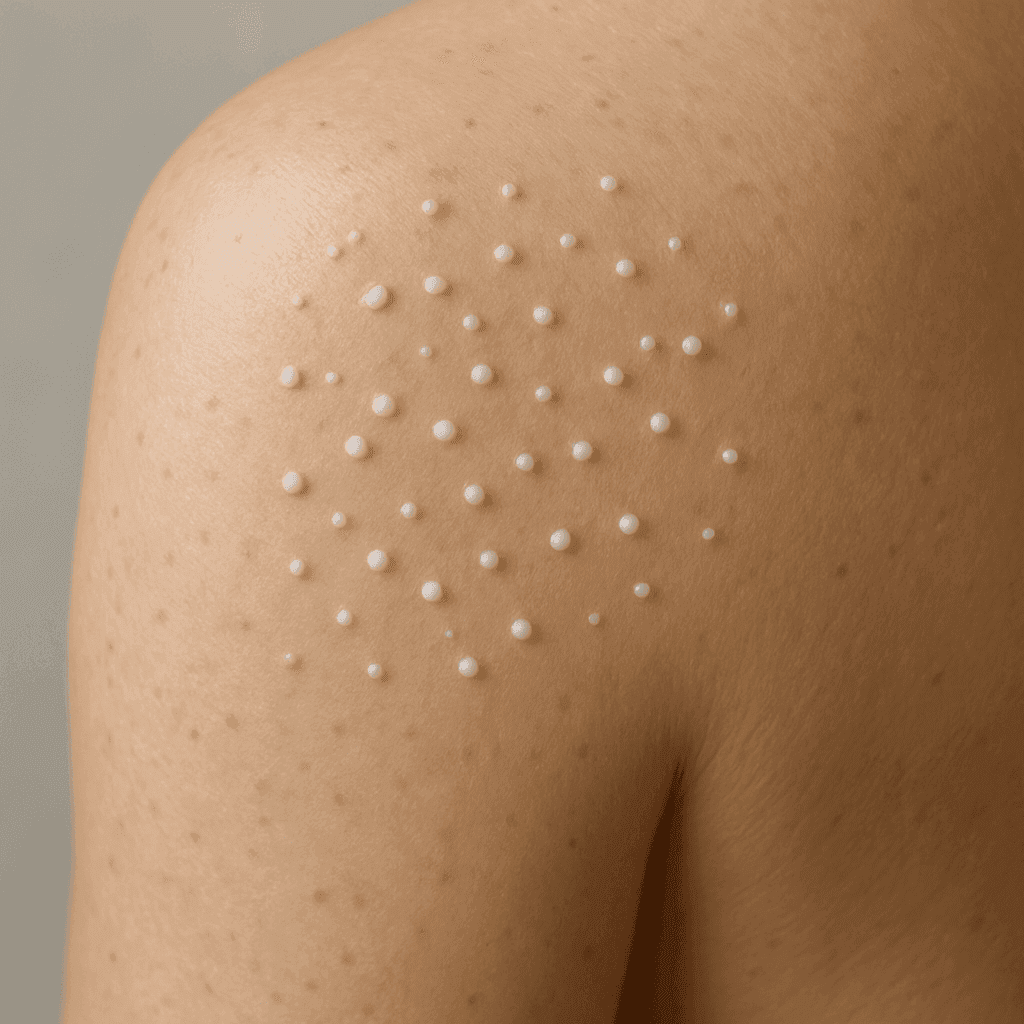
Milia – Small White Bumps Around the Eyes
Learn about causes, treatments, and prevention of milia.
Introduction
Milia are small, white cysts that often appear around the eyes, causing concern for many due to their noticeable appearance. Though they are generally harmless, understanding their nature can help in managing them effectively. These tiny bumps are common and can affect individuals of all ages, making them a frequent topic of inquiry in dermatology.
Understanding Milia
Milia are keratin-filled cysts that form just beneath the skin’s surface. They are distinct from acne and other skin conditions. Primary Milia occur naturally, often in newborns but can appear in adults as well. Secondary Milia result from skin trauma or damage, such as burns or rashes, leading to trapped skin cells.
Causes of Milia Around the Eyes
The primary cause of milia is the trapping of keratin—a protein found in skin and hair—beneath the skin’s surface. Sun damage can also contribute to their formation, as it thickens and dries the epidermis. Additionally, the use of heavy or occlusive skincare products can exacerbate the condition by clogging pores and trapping dead skin cells.
Identifying Milia
Milia are often mistaken for whiteheads, but they differ significantly. They are firm, painless, and do not have the inflammation associated with acne. Recognizing the symptoms and characteristics of milia is crucial for proper care and treatment.
Treatment Options for Milia
Treating milia typically involves gentle exfoliation and the use of over-the-counter topical retinoids. Professional extraction by a dermatologist is also an effective option but should be done carefully to avoid scarring. Some home remedies, such as steam treatments and the use of honey, can help, but always proceed with caution.
Prevention Tips for Milia
Preventing milia involves maintaining a suitable skincare routine. This includes using non-comedogenic (non-pore-clogging) products and protecting the skin from excessive sun exposure with a broad-spectrum sunscreen. When choosing skincare products, opt for those that are lightweight and suitable for your skin type.
Milia and Skin Types
Different skin types can influence the likelihood of milia formation. Oily skin may be more prone due to excess sebum production, while dry skin might form milia from layering heavy moisturizers. Tailoring your skincare routine to fit your skin type can help manage and prevent milia.
Milia in Different Age Groups
Milia in Newborns
Milia are quite common in newborns, often appearing on the nose and cheeks. They usually resolve on their own within a few weeks without treatment.
Milia in Adults and Elderly
In adults, milia can be persistent and may require intervention. Factors such as sun exposure and the use of unsuitable skincare products can contribute to their development in older age groups.
Frequently Asked Questions
What causes milia to form around the eyes?
Milia form due to trapped keratin under the skin, often exacerbated by sun damage or heavy skincare products.
Are there any risks associated with removing milia at home?
Yes, improper removal can lead to infection or scarring. Professional extraction is recommended.
Can lifestyle changes help prevent milia?
Yes, adopting a suitable skincare routine and sun protection can reduce risk.
How long does it take for milia to disappear on their own?
Milia can resolve naturally within a few weeks to months, depending on individual factors.
Is professional extraction the best option for treating milia?
Professional extraction is safe and effective, particularly for persistent cases.
Are there specific products to avoid to prevent milia formation?
Avoid heavy, oil-based products that can clog pores and lead to milia.