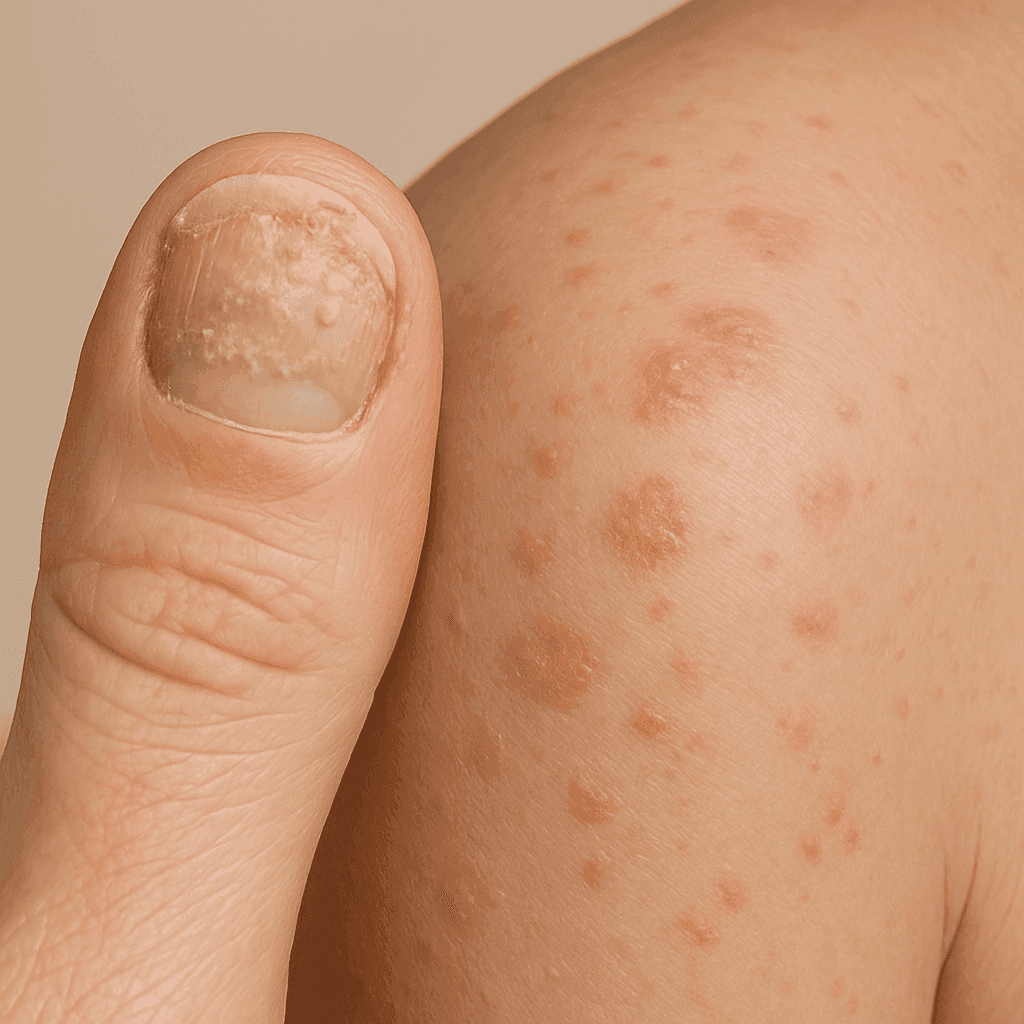
Nail Psoriasis – How to Recognize It?
Learn to identify and manage nail psoriasis.
Introduction
Nail psoriasis is a common condition that affects the nails, leading to various changes in appearance and texture. It is important to recognize the early signs of nail psoriasis to manage it effectively and prevent further complications. Early recognition can help in distinguishing it from other nail conditions and in seeking appropriate treatment.
What is Nail Psoriasis?
Nail psoriasis is a manifestation of psoriasis, a chronic autoimmune condition that causes rapid skin cell turnover. This can lead to thick, discolored, and pitted nails. While psoriasis itself affects about 2%–3% of the global population, nail involvement occurs in up to 50% of those patients. It can affect any demographic, although certain genetic and environmental factors may increase susceptibility.
Symptoms of Nail Psoriasis
Common symptoms include pitting, ridging, discoloration, and splinter hemorrhages under the nails. It's crucial to differentiate nail psoriasis from other conditions like fungal infections, which often present with similar nail changes but require different treatments. Nail psoriasis can also be confused with eczema, which typically involves more skin inflammation around the nails.
Causes and Risk Factors
Genetic predisposition is a significant factor in developing nail psoriasis. If you have a family history of psoriasis, your risk increases. Environmental triggers such as stress, injury to the nails, and certain infections can also exacerbate the condition. Understanding these factors can help in managing and potentially reducing flare-ups.
Diagnosis of Nail Psoriasis
A clinical examination by a dermatologist is essential to accurately diagnose nail psoriasis. Diagnostic tests, including skin biopsies and nail clippings, may be necessary to rule out fungal infections or other conditions. A professional evaluation ensures that you receive the correct diagnosis and treatment plan.
Treatment Options for Nail Psoriasis
Treatment can involve topical treatments like corticosteroids and vitamin D analogs, systemic medications, or phototherapy. Home remedies such as keeping nails trimmed and moisturized, avoiding nail trauma, and using gentle nail care products can also be beneficial. Lifestyle changes like stress management and a healthy diet may aid in reducing symptoms.
Managing Nail Psoriasis
Effective management includes adopting daily nail care routines such as moisturizing and protecting nails from trauma. Strategies to prevent flare-ups include avoiding known triggers, maintaining a balanced diet, and managing stress levels. Regular follow-ups with a dermatologist can help in adjusting treatment plans as needed.
Nail Psoriasis vs Other Nail Conditions
Nail psoriasis should be differentiated from fungal infections and eczema. Fungal infections typically lead to yellow, brittle nails, while eczema is characterized by inflamed, itchy skin around the nails. Accurate diagnosis is crucial for effective treatment, as each condition requires a different approach.
Impact of Nail Psoriasis on Quality of Life
Nail psoriasis can significantly impact an individual's psychological and social well-being. The visible nature of the condition can lead to self-consciousness and social withdrawal. Support from healthcare providers and support groups can be invaluable in managing these psychological effects.
FAQs About Nail Psoriasis
What are the first signs of nail psoriasis?
The first signs often include pitting or small depressions on the nail surface, discoloration, and thickening.
Can nail psoriasis be cured?
While there is no cure, symptoms can be managed effectively with appropriate treatment.
How does nail psoriasis affect daily life?
It can cause discomfort, impact nail appearance, and affect self-esteem.
Is nail psoriasis contagious?
No, nail psoriasis is not contagious.
What are the best home remedies for nail psoriasis?
Keeping nails short, moisturized, and avoiding harsh chemicals can be helpful.
How can I prevent nail psoriasis flare-ups?
Identifying and avoiding triggers, managing stress, and maintaining a healthy lifestyle are key strategies.