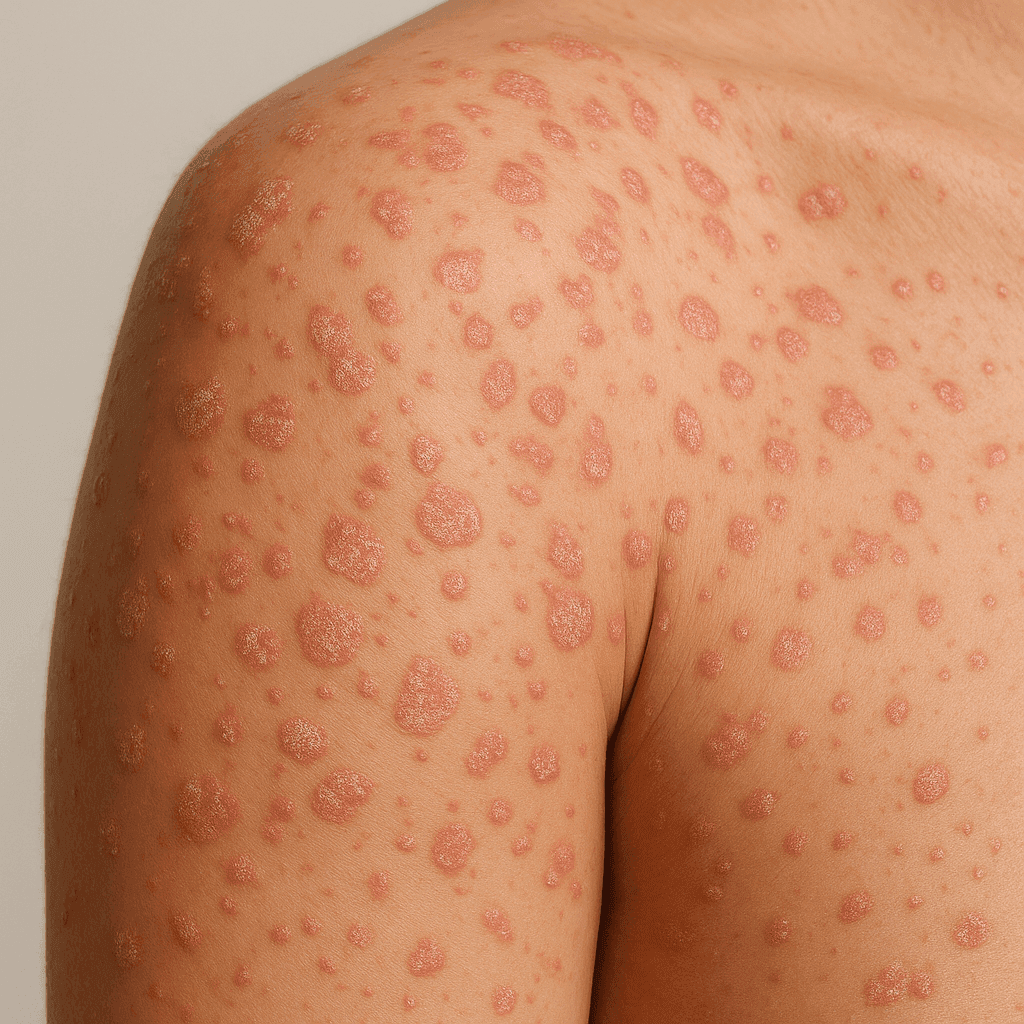
Psoriasis guttata (droplet psoriasis) - risk factors
Learn about the risk factors of droplet psoriasis and treatment options.
What is guttate psoriasis?
Definition and characteristics
Guttate psoriasis is a type of psoriasis characterized by small, red spots on the skin that resemble water droplets. These spots are usually covered with silvery scales. The disease often appears suddenly, sometimes after infections such as strep throat. Guttate psoriasis is most commonly diagnosed in children and young adults.
Epidemiology and prevalence
Guttate psoriasis accounts for about 10% of all psoriasis cases. It most commonly affects people under the age of 30, although it can occur at any age. It is equally common in both sexes and can be triggered by various factors, such as genetics, infections, and stress.
Symptoms of guttate psoriasis
How to recognize guttate psoriasis?
Symptoms of guttate psoriasis include the sudden appearance of small, red spots on the skin, which may be itchy and irritated. These spots most often appear on the trunk, arms, legs, and scalp. Unlike plaque psoriasis, the lesions are smaller and more scattered.
Differences between guttate psoriasis and other types of psoriasis
Guttate psoriasis differs from plaque psoriasis in the size and distribution of skin lesions. While plaque psoriasis is characterized by large, confluent patches, guttate psoriasis has smaller and more scattered lesions. In addition, guttate psoriasis may be more associated with bacterial infections than other forms of the disease.
Risk factors for guttate psoriasis
Genetics and heredity
Genetics plays an important role in the development of guttate psoriasis. Studies show that people whose parents have psoriasis are more likely to develop the disease. Multigenic inheritance is common, meaning that many genes may contribute to the onset of the disease.
The impact of bacterial and viral infections
Infections, especially those caused by streptococci, are one of the main risk factors for guttate psoriasis. Many cases begin after a throat infection. Therefore, it is important to consult a doctor if you have frequent infections.
Stress and its role in the development of psoriasis
Stress is widely recognized as a trigger and exacerbating factor in psoriasis. It can affect the immune system, which in turn can lead to the spread of skin lesions. Managing stress through relaxation techniques and psychological support can help control the symptoms of the disease.
Diet and its impact on the course of the disease
Diet can affect the course of guttate psoriasis. Although there is no specific diet that can cure this disease, healthy eating and avoiding processed foods can support overall health. It is recommended to increase the consumption of fruits, vegetables, and foods rich in omega-3 fatty acids, which may have anti-inflammatory effects.
Lifestyle and environmental factors
Environmental factors such as smoking, alcohol consumption, and physical inactivity can affect the course of psoriasis. Leading a healthy lifestyle, including regular exercise and avoiding stimulants, can help reduce the severity of symptoms.
Diagnosis of guttate psoriasis
Diagnostic methods
The diagnosis of guttate psoriasis is mainly based on a clinical examination performed by a dermatologist. The doctor assesses the appearance of skin lesions, their location, and the patient's medical history. The diagnosis is often made on the basis of characteristic symptoms.
Laboratory and imaging tests
In some cases, the doctor may order additional tests, such as a skin biopsy, to confirm the diagnosis. Blood tests are also sometimes performed to rule out other diseases or assess the patient's overall health. Laboratory tests can help detect coexisting infections that may affect the course of the disease.
Treatment of guttate psoriasis
Pharmacotherapy
Treatment of guttate psoriasis often involves the use of topical medications, such as corticosteroids, which help reduce inflammation and skin flaking. For more severe forms of the disease, your doctor may recommend systemic medications, such as methotrexate or cyclosporine.
Topical and systemic therapies
Topical therapy involves the use of various types of ointments and creams that help moisturize the skin and relieve symptoms. Systemic therapies may include phototherapy, which involves exposing the skin to UV rays, which can help reduce the severity of skin lesions.
Natural treatments
Some patients seek natural treatments, such as essential oils, aloe vera, or salt baths. While these methods may help relieve symptoms, it is always a good idea to consult your doctor before using them to avoid potential allergic reactions.
Prevention and management of guttate psoriasis
Lifestyle tips
Leading a healthy lifestyle is key to managing guttate psoriasis. Regular physical activity, avoiding stress, and getting enough sleep can help reduce the number of flare-ups. It is also important to avoid smoking and limit alcohol consumption.
The importance of diet in prevention
A healthy diet rich in fruits, vegetables, and whole grains can support overall health and reduce the risk of psoriasis flare-ups. Eating foods rich in omega-3s, such as fish, may have anti-inflammatory effects, which are beneficial for the skin.
The impact of climate and environment
Climate and environment can affect the course of psoriasis. Some people notice an improvement in symptoms in warmer climates, which may be due to increased sun exposure. However, it is important not to overdo sunbathing to avoid damaging the skin. It is also a good idea to avoid environmental pollutants, which can exacerbate symptoms.
Guttate psoriasis in children
Specific symptoms and treatment in children
Guttate psoriasis in children may manifest similarly to that in adults, but children may be more sensitive to certain medications. Therefore, it is important that treatment is tailored to the child's age and health condition. Regular consultations with a pediatrician and dermatologist are key to effective disease management.
Support for parents and caregivers
Parents of children with guttate psoriasis should be well informed about the disease and its treatment. Psychological support and education about the disease can help in coping with the challenges of caring for a child with psoriasis. It is also worth contacting support groups that offer help and share experiences with other parents.
Summary
Key information and recommendations
Guttate psoriasis is a chronic skin disease that can be triggered by various factors, including infections and stress. Although there is no cure for this disease, proper management and treatment can significantly improve the quality of life of patients. It is important to lead a healthy lifestyle and consult a doctor regularly.
Prospects for research on guttate psoriasis
Research on guttate psoriasis focuses on better understanding its causes and developing new treatments. In the future, we can expect advances in gene therapy and the development of more effective and less invasive treatments that can bring relief to patients around the world.