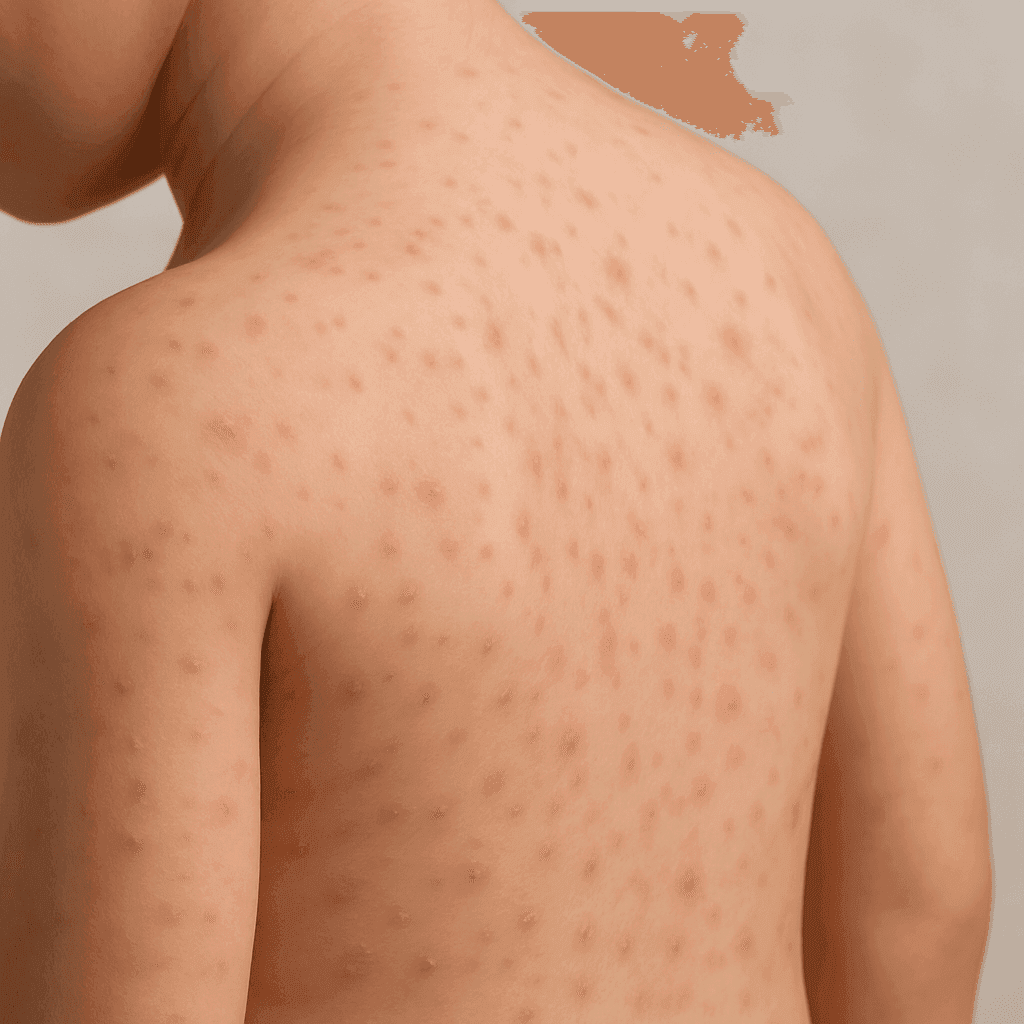
Skin Rash in Children – Common Causes
Identify and understand skin rashes in kids.
Introduction
Skin rashes in children are a common concern for parents and caregivers. They can appear unexpectedly and may cause discomfort or alarm. Rashes can result from a variety of factors, including infections, allergic reactions, or chronic skin conditions. Identifying and understanding the cause of a rash is crucial for effective treatment and relief. Early intervention can prevent complications and help soothe your child's skin.
Common Causes of Skin Rash in Children
Viral Infections
Viral infections are a leading cause of skin rashes in children. Common viral rashes include measles, chickenpox, and hand, foot, and mouth disease. Measles presents with a red rash and flu-like symptoms. Chickenpox causes itchy, blister-like spots. Hand, foot, and mouth disease is characterized by sores in the mouth and a rash on hands and feet. These infections often spread easily among children, especially in school or daycare settings.
Bacterial Infections
Bacterial infections like impetigo and scarlet fever can also cause rashes. Impetigo is a highly contagious skin infection that presents with red sores, often around the nose and mouth. Scarlet fever, associated with strep throat, features a red, sandpaper-like rash usually starting on the chest. Prompt treatment with antibiotics is essential to prevent complications and spread.
Fungal Infections
Fungal infections such as ringworm and candidiasis are common in children. Ringworm causes a circular, scaly rash with a clear center, while candidiasis can lead to red, itchy patches, often in warm, moist areas. These infections can be treated effectively with antifungal creams or medications as advised by a healthcare provider.
Allergic Reactions
Allergic reactions can cause skin rashes due to food allergies or environmental allergens. Common triggers include certain foods, pollen, pet dander, and dust mites. Allergic rashes typically appear as hives—raised, itchy welts on the skin. Avoidance of known allergens and antihistamines can help manage these reactions.
Chronic Skin Conditions
Chronic skin conditions like eczema and psoriasis also cause rashes in children. Eczema, or atopic dermatitis, leads to dry, itchy patches, often on the face, elbows, or knees. Psoriasis causes thick, red skin with silvery scales. Both conditions require ongoing management, often involving moisturizers and topical medications.
Symptoms and Diagnosis
Identifying symptoms of various rashes is crucial for diagnosis. Look for changes in skin color, texture, and any accompanying symptoms like fever or itching. When in doubt, consult a pediatrician. They may recommend diagnostic tests such as skin scrapings or blood tests to determine the cause and appropriate treatment.
Treatment Options
Treatment depends on the cause of the rash. Over-the-counter remedies like antihistamines and topical creams can relieve mild symptoms. Prescription medications may be necessary for more severe cases. Home care, such as keeping the skin moisturized and avoiding irritants, plays a vital role in managing rashes.
Preventive Measures
Preventing skin rashes involves good hygiene, allergen avoidance, and vaccinations. Encourage regular hand washing and keep your child's environment clean. Vaccinations can prevent viral rashes like measles and chickenpox. If your child has known allergies, take steps to minimize exposure to triggers.
Conclusion
Understanding the common causes of skin rashes in children helps in managing and preventing them. Always seek medical advice for persistent or severe rashes to ensure proper care and treatment. With the right approach, most rashes can be effectively managed and resolved.
FAQs about Skin Rash in Children
What are the most common causes of skin rash in children?
Viral infections, bacterial and fungal infections, allergic reactions, and chronic skin conditions are common causes of rashes in children.
How can I tell if a rash is serious?
If a rash is accompanied by fever, pain, or rapid spreading, consult a doctor. Persistent or worsening rashes also warrant medical attention.
When should I take my child to a doctor for a rash?
Seek medical advice if the rash is severe, persistent, causes significant discomfort, or if you suspect an infection.
Can skin rashes in children be prevented?
Good hygiene, avoiding known allergens, and vaccinations can help prevent many rashes.
What home remedies can help soothe a child's rash?
Keeping the skin moisturized and using over-the-counter creams can alleviate mild rashes. Avoiding irritants is also beneficial.
Are skin rashes contagious?
Some rashes, like those caused by viral or bacterial infections, are contagious. Practicing good hygiene can help prevent spread.