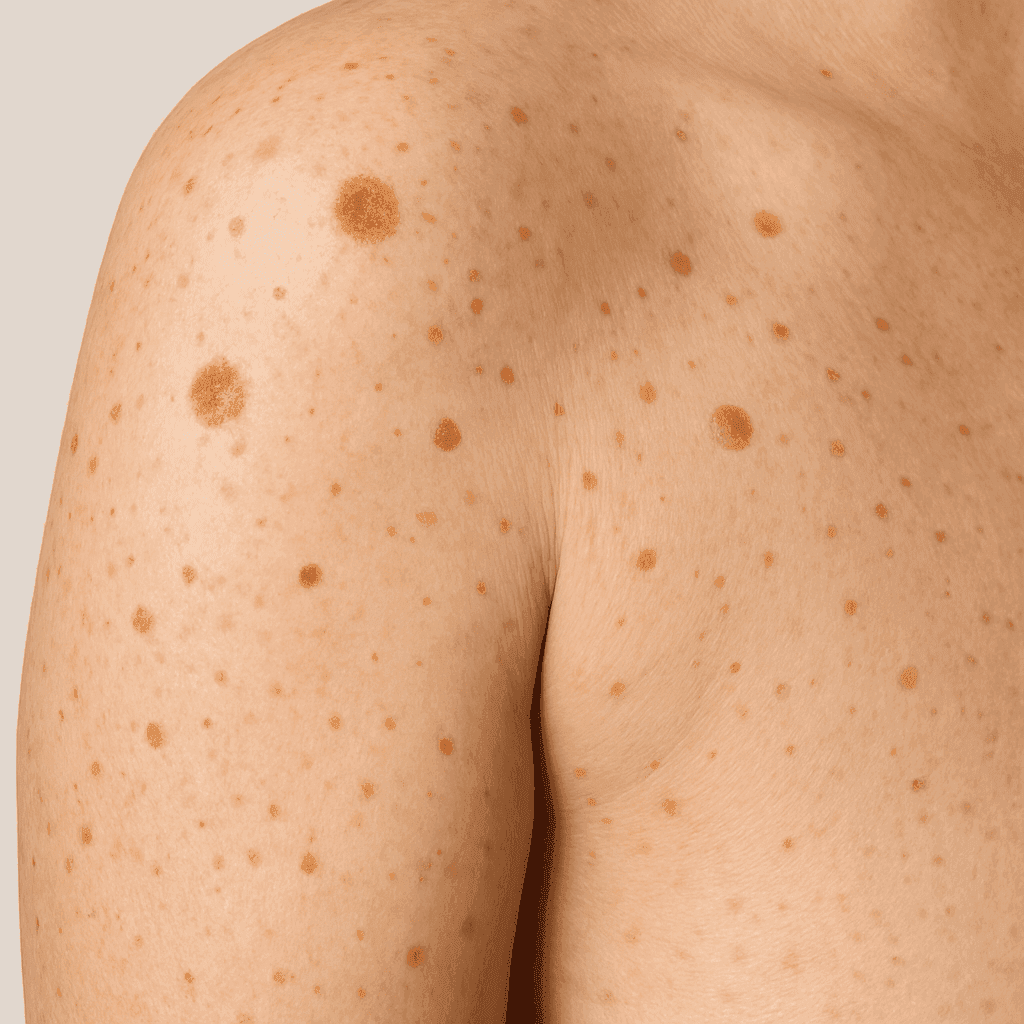
Skin Spots – The Most Common Causes and Diagnosis
Understanding causes and diagnosis of skin spots.
Introduction
Skin spots are a common dermatological concern affecting individuals of all ages. They can vary in appearance, from small freckles to larger pigmented areas, and may be influenced by a variety of factors. Understanding the causes and diagnosis of skin spots is crucial for proper management and treatment. This article provides an in-depth look at the different types of skin spots, their causes, and when it is necessary to seek medical advice.
What Are Skin Spots?
Skin spots, or hyperpigmented areas, are patches of skin that differ in color from surrounding areas. They can be flat or raised, and their color can range from light brown to black. Common characteristics include varying sizes, shapes, and textures. Skin spots may appear anywhere on the body and can be influenced by genetic, environmental, or lifestyle factors.
Common Characteristics
- Color: Typically brown, black, or red
- Texture: Can be smooth or rough
- Shape: Often round or oval, but may vary
- Size: Ranges from a few millimeters to several centimeters
Common Causes of Skin Spots
Skin spots can develop for numerous reasons, with some of the most common causes being sun exposure, hormonal changes, and age-related factors. Each cause affects the skin differently and may lead to distinct types of spots.
Sun Exposure and UV Damage
Prolonged exposure to ultraviolet (UV) rays from the sun can lead to the development of sunspots, also known as solar lentigines. These spots are often found on areas of the skin that receive the most sun exposure, such as the face, hands, and arms.
Hormonal Changes and Skin Spots
Hormonal fluctuations, particularly during pregnancy or menopause, can lead to conditions like melasma. This type of pigmentation manifests as brown or gray patches, usually on the face.
Age-Related Skin Changes
As the skin ages, it undergoes various changes, including the appearance of age spots or liver spots. These are flat, brown, or black spots that usually appear on sun-exposed areas.
Allergic Reactions and Skin Spots
Certain allergic reactions can cause skin spots or rashes. These reactions are often accompanied by itching and redness.
Genetic Factors Influencing Skin Spots
Genetics can play a significant role in the development of skin spots. Conditions like freckles tend to run in families and are more common in individuals with fair skin.
Types of Skin Spots
There are several types of skin spots, each with distinct characteristics and causes. Understanding the differences can help in identifying and managing them effectively.
Freckles and Sunspots
Freckles are small, brown spots commonly found on the face and arms. They are genetic and become more pronounced with sun exposure. Sunspots, or solar lentigines, are larger and darker than freckles, resulting from cumulative sun exposure.
Moles and Their Variations
Moles, or nevi, are typically benign skin growths that can be either flat or raised. They vary in color from pink to dark brown and can appear anywhere on the body.
Age Spots or Liver Spots
These are flat, brown, or black spots that usually develop on sun-exposed areas of the skin. They are more common in older adults and are considered harmless.
Melasma and Its Causes
Melasma is characterized by brown or gray patches, often on the face. It is more common in women and is linked to hormonal changes.
Birthmarks and Vascular Lesions
Birthmarks are present at birth or develop shortly after. They can be pigmented or vascular, with examples including café-au-lait spots and hemangiomas.
Diagnosis of Skin Spots
Accurate diagnosis of skin spots is critical to determine if they are benign or require further investigation. Dermatologists use several techniques to assess skin spots.
Physical Examination Techniques
A dermatologist will typically begin with a visual inspection of the skin. They will assess the spot's size, color, and shape to determine its nature.
Dermatoscopy and Its Role in Diagnosis
Dermatoscopy involves using a handheld device that magnifies the skin, allowing for a closer examination of skin spots. This technique helps differentiate between benign and potentially malignant lesions.
Skin Biopsy Procedures
If a spot appears suspicious, a dermatologist may perform a biopsy. This involves removing a small sample of the skin for laboratory analysis to check for signs of skin cancer.
Use of Imaging Technologies
Advanced imaging technologies, such as reflectance confocal microscopy, provide non-invasive ways to examine skin lesions at a cellular level, aiding in early detection and diagnosis.
When to Seek Medical Advice
It is essential to seek medical advice if you notice any changes in your skin spots or if new ones appear. Early detection of potential skin cancers can significantly improve outcomes.
Signs of Potentially Malignant Skin Spots
- Changes in size, color, or shape
- Irregular borders or asymmetry
- Development of symptoms like itching, bleeding, or crusting
If you observe any of these changes, contact a dermatologist promptly. Regular skin checks, both at home and by a professional, can aid in early detection.
Treatment Options for Skin Spots
Various treatments are available for managing skin spots, depending on their type and cause.
Topical Treatments and Creams
Over-the-counter and prescription creams are available to lighten skin spots. Ingredients like hydroquinone and retinoids are commonly used.
Laser Therapy and Light Treatments
Laser treatments can effectively remove or reduce the appearance of certain types of skin spots, such as sunspots and melasma.
Surgical Removal and Considerations
In some cases, surgical removal of skin spots may be necessary, particularly if they are suspected to be cancerous.
Preventive Measures and Lifestyle Changes
Preventing skin spots involves protecting the skin from sun exposure, using sunscreen, and wearing protective clothing. A healthy diet and skincare routine can also contribute to skin health.
Living with Skin Spots
For many, skin spots can be a cosmetic concern, impacting self-esteem and confidence. Managing the psychological effects is as important as treating the physical appearance.
Cosmetic Concerns and Management
Many individuals seek treatment for skin spots due to their appearance. Makeup and skincare products can help conceal spots and improve skin texture.
Psychological Impact and Support
The presence of skin spots may affect one's mental health. Support groups and counseling can provide emotional support and coping strategies.
FAQs about Skin Spots
What Causes Skin Spots to Suddenly Appear?
Sudden appearance of skin spots can be due to sun exposure, hormonal changes, or skin irritation. It's crucial to monitor these spots for any changes.
Are Skin Spots Always a Sign of Skin Cancer?
Not all skin spots are cancerous. However, any changes in size, shape, or color should be evaluated by a dermatologist.
How Can I Prevent Skin Spots from Developing?
Preventive measures include using sunscreen, avoiding excessive sun exposure, and maintaining a healthy skincare routine.
Can Skin Spots Be Removed Permanently?
Some treatments can significantly reduce or remove skin spots, but continued sun protection is necessary to prevent recurrence.
What Is the Difference Between a Mole and a Skin Spot?
Moles are typically raised and can be any color, while skin spots are generally flat and vary in color. Both should be monitored for changes.
Are There Any Home Remedies for Treating Skin Spots?
Some home remedies, like using lemon juice or aloe vera, may help lighten spots, but their effectiveness varies. Professional treatment is often more reliable.