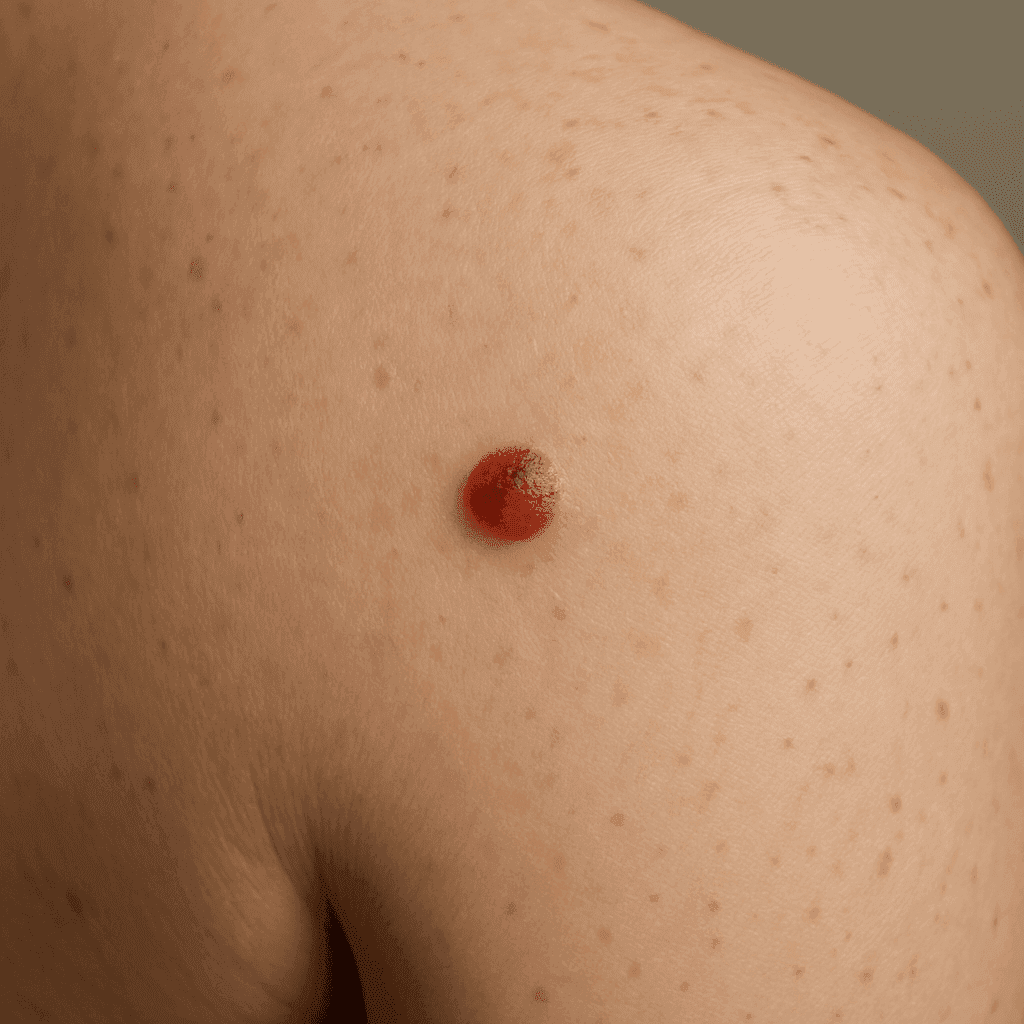
Spitz nevus – a type of benign mole
Learn about benign skin lesions called Spitz nevi.
Introduction
Spitz nevus is a type of mole that is typically benign and appears as a raised, dome-shaped lesion on the skin. It was first described by Sophie Spitz in 1948, who initially thought they resembled juvenile melanomas due to their appearance. However, further research has shown that most Spitz nevi are non-cancerous and do not pose significant health risks. Despite their benign nature, they can often resemble melanoma, making accurate diagnosis crucial.
Definition of Spitz Nevus
A Spitz nevus is generally characterized by a pink, red, or brown lesion that is symmetric and well-defined. These lesions are most commonly found in children and adolescents, but they can occur at any age. Understanding the characteristics and behaviors of a Spitz nevus aids in differentiating it from other skin conditions, particularly melanoma.
Characteristics of Spitz Nevus
Visually, a Spitz nevus presents as a smooth, shiny, and dome-shaped growth on the skin. They often appear on the face, legs, or arms, but can occur anywhere on the body. These moles are typically less than one centimeter in diameter and may change color or become darker over time. Spitz nevi are most prevalent in children and young adults, although they can develop at any stage of life.
Common Locations and Demographics
Spitz nevi are frequently found on sun-exposed areas of the body, such as the face and limbs. Although they can develop in adults, they are most common in children, particularly those under the age of 10. Both males and females are equally likely to develop these lesions, with a slight increase in incidence during adolescence.
Causes and Risk Factors
The exact cause of Spitz nevi is not fully understood, but genetic factors are believed to play a significant role. Some studies suggest that certain genetic mutations may contribute to their development. Environmental factors, such as prolonged sun exposure, might also influence the formation of these moles, although evidence is not conclusive.
Genetic and Environmental Influences
While genetic predisposition is a primary factor, environmental influences like UV radiation may also affect Spitz nevus development. It's important for individuals, especially those with a family history of atypical moles, to monitor skin changes and practice sun safety to potentially reduce risk.
Diagnosis
Proper diagnosis of a Spitz nevus is essential to distinguish it from melanoma. Dermatologists typically begin with a clinical examination, assessing the lesion's appearance and growth pattern. Dermoscopy, a magnification technique, helps provide a more detailed view of the skin lesion, offering clues to its nature.
Biopsy and Histopathological Analysis
If the lesion's characteristics are ambiguous, a biopsy may be performed. This involves removing a small tissue sample for histopathological analysis under a microscope. The analysis helps confirm whether the lesion is a benign Spitz nevus or something more concerning. This step is crucial for guiding appropriate treatment and management strategies.
Treatment Options
Treatment for Spitz nevus depends on the lesion's characteristics and the patient's age. In many cases, observation and regular monitoring are sufficient, especially when the nevus is clearly benign. If changes occur or the nevus is aesthetically concerning, surgical excision might be considered.
Surgical and Non-Surgical Interventions
Surgical excision involves removing the nevus along with a margin of surrounding tissue to ensure complete removal. This is often recommended for moles that change in appearance or are located in areas prone to irritation. Laser treatment is another option, primarily for cosmetic reasons, although it is not commonly used for deeper lesions.
Prognosis and Outcomes
The prognosis for individuals with a Spitz nevus is generally excellent, given its benign nature. Most Spitz nevi do not recur after removal, although monitoring is recommended to detect any potential changes early. Regular follow-ups with a dermatologist ensure continued skin health and prevent complications.
Long-Term Outlook
While Spitz nevi are benign, they should be monitored for changes in size, shape, or color. Patients with a history of Spitz nevi are advised to undergo regular skin checks and practice sun protection to maintain overall skin health and reduce the risk of developing new lesions.
Spitz Nevus vs. Melanoma
Differentiating between Spitz nevus and melanoma is critical due to the serious nature of melanoma. Spitz nevi are usually symmetric, with well-defined borders, whereas melanoma often presents asymmetrically with irregular borders. Color uniformity in Spitz nevi contrasts with the varied pigmentation often seen in melanoma.
Importance of Accurate Diagnosis
Accurate diagnosis is imperative to avoid unnecessary treatment or anxiety. Dermatologists use a combination of clinical examination, dermoscopy, and histopathological analysis to differentiate between these lesions. Patients are encouraged to seek professional evaluation for any uncertain skin changes.
Special Considerations
Spitz nevi require special consideration when they occur in children, as their presentation can be more dynamic. In adults, these lesions might warrant closer scrutiny due to the higher risk of melanoma.
Pediatric and Adult Cases
In pediatric cases, Spitz nevi often necessitate regular monitoring due to their rapid growth potential. Adults with new or changing Spitz nevi should consult a dermatologist promptly to exclude malignancy. Cosmetic concerns, particularly for facial lesions, can influence treatment decisions, balancing aesthetic outcomes with medical necessity.
Prevention and Monitoring
Preventing Spitz nevi is not entirely possible, but proactive measures can reduce associated risks. Regular skin checks by a dermatologist are recommended, especially for individuals with a history of atypical moles. Protective measures against sun exposure, such as using sunscreen and wearing protective clothing, are advised.
Sun Protection and Skin Checks
- Apply broad-spectrum sunscreen daily.
- Wear hats and long sleeves when outdoors.
- Schedule regular dermatological exams.
- Monitor skin for any new or changing lesions.
These steps help maintain skin health and facilitate early detection of any concerning changes.
FAQs about Spitz Nevus
Can a Spitz nevus become cancerous?
While Spitz nevi are benign, any changes in appearance should be evaluated by a dermatologist to rule out malignancy.
How is a Spitz nevus different from a regular mole?
Spitz nevi tend to be more elevated and may change color more frequently than common moles.
What should I do if I notice changes in my Spitz nevus?
Consulting a dermatologist is crucial if you observe any changes in size, color, or shape.
Is it necessary to remove a Spitz nevus?
Removal is typically considered if the nevus changes or for cosmetic reasons, but many can be safely monitored.
How often should Spitz nevi be monitored?
Regular monitoring should be guided by a dermatologist, particularly in children and those with a family history of skin lesions.
Are there any complications associated with Spitz nevus removal?
Complications are rare but can include scarring or infection, which should be discussed with your healthcare provider.