
Itchy rash - causes, treatment and prevention
Introduction
An itchy rash is a common occurrence that can be both irritating and distressing. It can have many causes, from allergies to infections. Understanding the symptoms and causes of the rash is key to an appropriate approach to treatment and prevention. In this article, we will look at the different aspects of an itchy rash to help you identify possible sources of the problem and available treatments.
Causes of an itchy rash
Allergies
Allergies are one of the most common causes of an itchy rash. They can be triggered by a variety of factors, such as foods, cosmetics or detergents. Food allergies often manifest as skin reactions after eating allergens such as nuts, seafood or milk. Contact allergies, on the other hand, can occur after direct contact with irritants such as latex or nickel.
Infections
Viral and bacterial infections are another group of causes of itchy rash. Viral infections, such as chickenpox, often start with itchy skin lesions. Bacterial infections, such as strep throat, can lead to skin infections and rash formation.
Skin diseases
Skin diseases such as eczema and psoriasis are also common causes of an itchy rash. Eczema manifests as dry, itchy skin with cracks, while psoriasis is characterised by red, scaly patches. Both conditions require specialised treatment.
Environmental factors
Climatic conditions and pollution can also affect the severity of an itchy rash. Dry air, cold, and air pollutants can irritate the skin, leading to rash formation.
Symptoms of an itchy rash
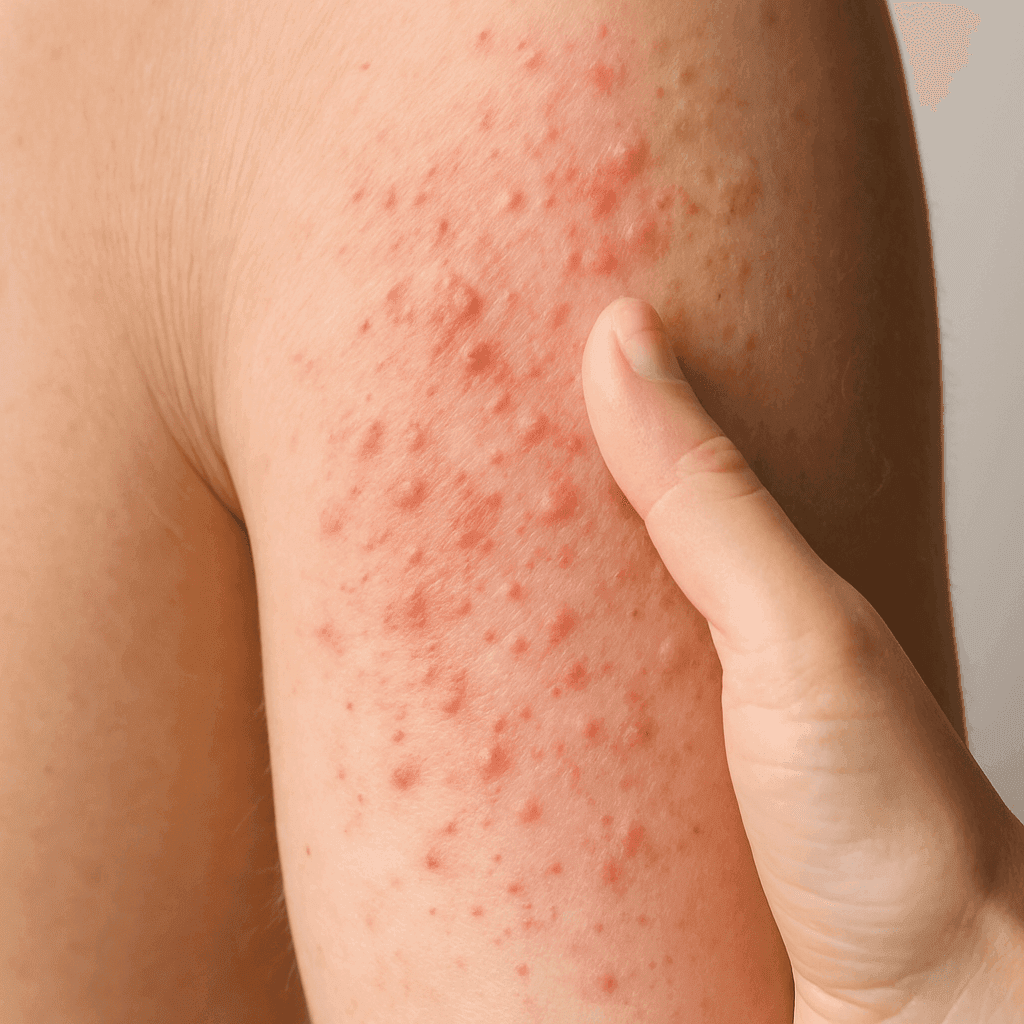
Typical symptoms of an itchy rash include redness, swelling and an itchy sensation. In some cases there may be blistering or peeling of the skin. Symptoms can vary depending on the cause of the rash and the age of the affected person - children often have softer skin, which can lead to more intense symptoms.
Diagnosis
Identifying the type of rash is crucial for proper treatment. The diagnosis is based on a medical examination and a history of lifestyle and recent contacts with potential allergens. If necessary, the doctor may order additional tests, such as allergy tests or microbiological tests.
Treatment of an itchy rash
Pharmacological treatment
Pharmacological treatment of an itchy rash often includes the use of antihistamines to reduce allergic reactions. In cases of infection, antibiotics or antivirals may be needed. Corticosteroids may be applied topically to relieve inflammation and itching.
Home remedies for symptom relief
In addition to drug treatment, there are a number of home remedies to relieve the symptoms of the rash. Cool compresses can help reduce swelling and itching. Bathing in lukewarm water with oatmeal can also provide relief. It is important to avoid scratching, which can exacerbate inflammation.
When to see a doctor?
In the case of a rash that does not go away after a few days, it is worth consulting a doctor. Symptoms such as fever, pain, sores or changes in the appearance of the rash are particularly worrying. Early diagnosis can prevent more serious complications.
Prevention of an itchy rash
Avoiding allergens and irritants is key to preventing the rash. A balanced diet and healthy lifestyle can also help to maintain healthy skin. Moisturising the skin regularly and protecting it from extreme weather conditions can reduce the risk of developing a rash.
Summary
An itchy rash can have many causes, but understanding its symptoms and potential sources is key to effective treatment. Remember to consult your doctor if you have concerns about your skin condition to get the right diagnosis and treatment.
FAQ
Does an itchy rash always require treatment?
Not always, but if the rash does not go away on its own, causes great discomfort or is accompanied by other worrying symptoms, it is worth seeking medical advice.
What are the most common causes of an itchy rash?
The most common causes are allergies, infections and skin diseases such as eczema or psoriasis. Climatic and environmental conditions can also affect the skin.
Zobacz także: